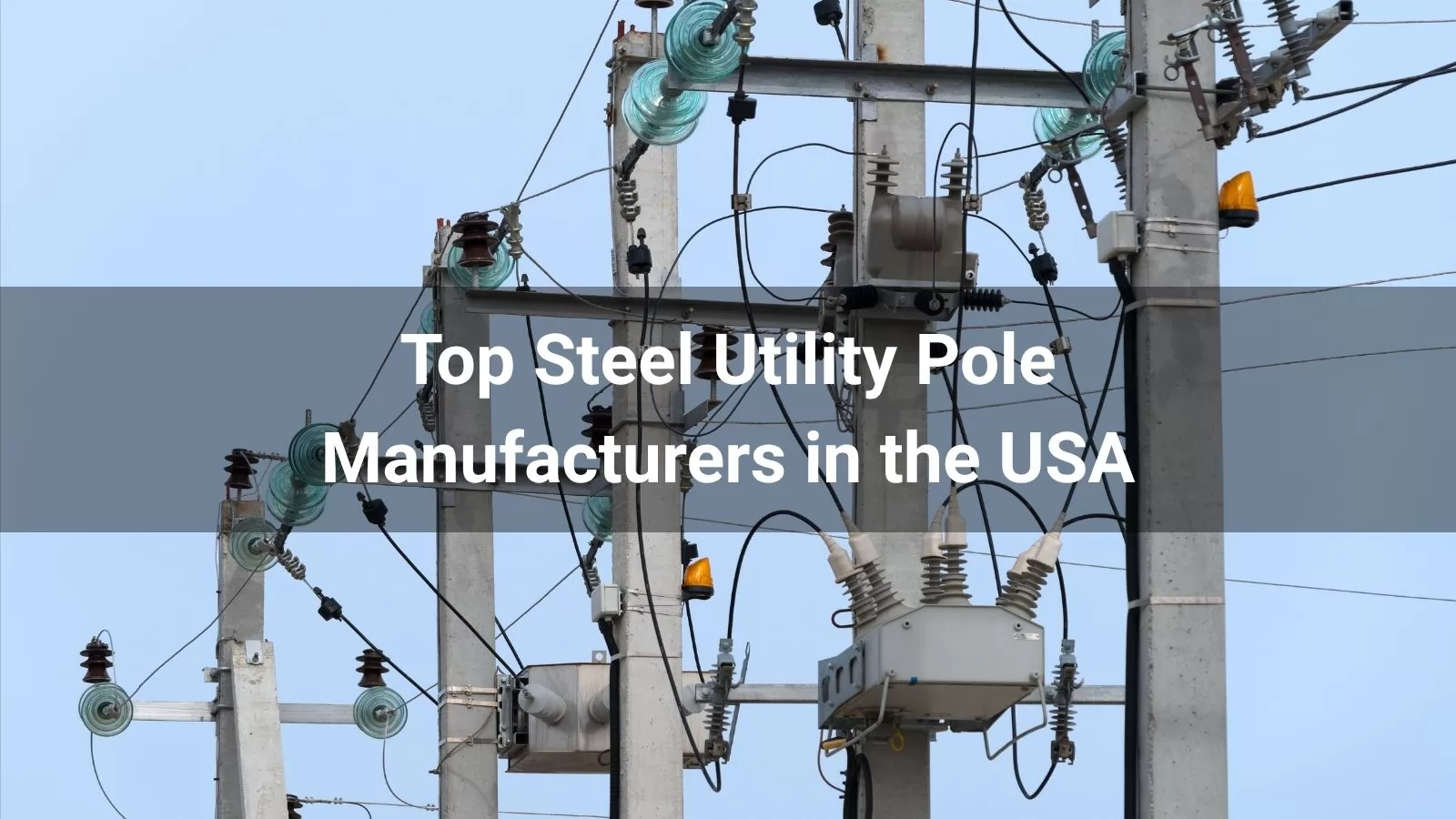

Are you looking for reliable steel transmission pole manufacturers for a high-voltage power transmission project? Selecting the right manufacturer is essential for ensuring structural reliability, meeting engineering requirements, controlling project costs, and maintaining long-term grid performance.
If the answer is yes, then comparing manufacturers based on their engineering capabilities, product range, manufacturing experience, quality management, and project support can help you make a more informed procurement decision. Steel transmission poles are engineered structures designed to support overhead conductors, insulators, and associated electrical equipment under demanding mechanical and environmental conditions.
This article introduces 10 companies involved in steel transmission poles, tubular transmission structures, monopoles, and related power infrastructure. The list includes established international manufacturers as well as specialized steel structure companies. It is intended as a procurement starting point rather than a formal ranking based on audited production volume or market share.
Quick Navigation
Top 10 Companies
- Valmont Utility
- Meyer Utility Structures
- XH Tower
- Sabre Industries
- MICA Steelworks
- Nucor Towers & Structures
- TAPP, Inc.
- SI Utility
- CHM Utility
- Al-Babtain Power & Telecommunications
Other Sections
Comparison of the Top 10 Steel Transmission Pole Manufacturers
The following table provides a quick overview of the companies, their main markets, and their relevant product capabilities. The distinction between tubular poles, monopoles, and lattice towers is important when shortlisting suppliers for a specific transmission line project.
| No. | Company | Country / Region | Relevant Products | Key Strength |
|---|---|---|---|---|
| 1 | Valmont Utility | United States | Steel transmission poles, hybrid poles, transmission structures | Broad engineered utility structure portfolio |
| 2 | Meyer Utility Structures | United States | Engineered poles, lattice towers, substation structures | Transmission engineering and structural testing |
| 3 | XH Tower | China | Transmission line towers, steel utility poles, tubular steel towers | Steel tower engineering and export-oriented manufacturing |
| 4 | Sabre Industries | United States | Tubular transmission structures, H-frame and specialty structures | Custom transmission structures for high-voltage projects |
| 5 | MICA Steelworks | United States | Tubular steel poles, lattice towers, substation steel | Utility structure design and fabrication |
| 6 | Nucor Towers & Structures | United States | Steel utility poles and transmission structures | Integrated domestic steel supply |
| 7 | TAPP, Inc. | United States | Steel transmission and distribution poles, utility structures | Specialized steel pole manufacturing |
| 8 | SI Utility | United States | Tubular steel transmission poles, H-frame structures | Utility structures up to 500 kV |
| 9 | CHM Utility | United States | Power transmission poles, monopoles, wood-pole equivalents | Utility-focused pole engineering and fabrication |
| 10 | Al-Babtain Power & Telecommunications | Saudi Arabia | Transmission monopoles, transmission towers, distribution poles | Regional manufacturing and international project experience |
1. Valmont Utility

Valmont Utility is an established provider of engineered structures for the electric utility industry. Its product portfolio includes steel transmission poles, concrete poles, hybrid structures, and substation solutions. The company serves projects with different structural, environmental, and electrical requirements.
For steel transmission applications, Valmont offers custom-engineered pole solutions designed around project-specific loading conditions and line configurations. Its engineering approach considers structural performance, installation requirements, corrosion protection, and long-term service conditions. The company also provides multiple material and coating options, including hot-dip galvanizing and weathering steel solutions.
Valmont's broad utility infrastructure portfolio makes it relevant to buyers seeking more than a standard pole product. Projects involving different structure types, special configurations, or coordinated transmission and substation requirements may benefit from its engineering and manufacturing capabilities.
2. Meyer Utility Structures

Meyer Utility Structures specializes in transmission and distribution structure solutions. The company has more than six decades of experience in the utility transmission sector and provides engineering, product design, and manufacturing services for complex infrastructure projects.
Its product portfolio includes engineered poles, lattice towers, light-duty poles, substation structures, and other utility-related products. Meyer also emphasizes engineering support and structural testing, helping customers evaluate designs against project-specific loading and environmental conditions.
For transmission pole procurement, the company's experience with customized structures and its focus on engineering and testing are relevant considerations. Buyers can discuss pole geometry, material selection, connection details, foundation requirements, and applicable project standards during the specification stage.
3. XH Tower

XH Tower is a China-based steel tower manufacturer specializing in the design, fabrication, and export of steel structures for power transmission and telecommunications applications. Its product portfolio includes transmission line towers, angle steel towers, tubular steel towers, monopoles, steel utility poles, and tower components.
For power infrastructure projects, XH Tower provides transmission line tower solutions across a range of voltage applications. Its published transmission tower information references design and fabrication capabilities from 33 kV to 1,000 kV. The company also offers galvanized steel utility poles and related structural products for power distribution and utility applications.
XH Tower's manufacturing experience in steel structure processing and export services makes it a potential partner for buyers seeking customized steel transmission structures. Its product range covers both lattice transmission towers and steel utility poles, allowing buyers to discuss different structural solutions according to project requirements.
For international procurement teams, XH Tower offers a range of steel tower and pole products that can be evaluated for different power infrastructure projects. Buyers can provide project drawings, technical specifications, required quantities, and delivery details to discuss a suitable manufacturing solution.
4. Sabre Industries

Sabre Industries provides engineered steel structures for power and utility infrastructure. Its transmission structure business covers a range of configurations, including single-pole structures, multi-pole structures, H-frames, A-frames, and Y-frames.
The company offers steel transmission and distribution structures for demanding utility applications. Its solutions are developed with attention to structural design, installation requirements, foundation considerations, and long-term project performance.
Sabre's range of tubular structures can be relevant to utilities that need alternatives to conventional lattice structures or require special configurations for challenging line routes. Project teams can work with the manufacturer to define structure geometry, loading conditions, connection details, and foundation interfaces.
5. MICA Steelworks

MICA Steelworks provides structural steel design, engineering, and fabrication services for utility, transportation, telecommunications, and custom infrastructure projects. Its utility product range includes tubular steel poles, lattice towers, and substation structures.
The company's tubular steel pole offering covers custom-engineered and light-duty applications. Its utility structure services also include transmission structures designed and fabricated to meet project requirements. MICA's lattice tower portfolio includes structures ranging from 69 kV single-circuit applications to higher-voltage multi-circuit configurations, according to its published product information.
MICA is also notable for its structural steel fabrication background. For buyers comparing suppliers, it is worth discussing engineering responsibilities, fabrication scope, quality documentation, galvanizing requirements, and delivery arrangements before placing an order.
6. Nucor Towers & Structures

Nucor is a major North American steel producer with a Towers & Structures business serving the power transmission market. Its offering includes steel utility poles and transmission-related structures, supported by an integrated steel supply chain.
The company's utility structure business provides steel pole solutions for different utility applications. Its product information includes light-duty tapered steel transmission poles and custom-engineered steel utility poles designed around different height, strength, and loading requirements.
Nucor's domestic steelmaking and manufacturing integration can be relevant to buyers prioritizing material traceability, supply chain coordination, and North American project requirements. Procurement teams should confirm the specific product category, pole duty class, engineering scope, and manufacturing location for each project.
7. TAPP, Inc.

TAPP, Inc. is a steel pole and structure manufacturer serving utility and communication infrastructure markets. Its product portfolio includes transmission and distribution structures, pre-engineered and light-duty poles, and communication structures.
The company focuses on customized steel pole solutions for utility customers. Its transmission and distribution offering is intended to address projects with different structural configurations and technical requirements. TAPP also highlights its manufacturing experience in the steel structure industry.
When evaluating TAPP for a transmission project, buyers should provide the required voltage class, structure type, loading criteria, pole dimensions, material specifications, and applicable design standards. These details help determine whether the manufacturer's proposed solution matches the project's engineering requirements.
8. SI Utility

SI Utility focuses on steel structures for electric utility infrastructure. Its product range includes tubular steel transmission poles, H-frame structures, substation structures, and pre-engineered steel poles for distribution applications.
The company states that it provides custom design, drafting, and manufacturing of tubular steel transmission poles and H-frame structures for voltages up to 500 kV. It also offers professional engineering stamping support across the United States, subject to project requirements.
SI Utility's focused product range makes it relevant for buyers who need transmission structures rather than a broad selection of unrelated steel products. During supplier evaluation, buyers should clarify the engineering deliverables, design criteria, fabrication tolerances, inspection procedures, and delivery scope included in the quotation.
9. CHM Utility

CHM Utility is a Texas-based manufacturer focused on steel structures for utility and telecommunications applications. Its capabilities include engineering, design, manufacturing, testing, and finishing of steel pole structures.
The company's product portfolio includes power transmission poles, wood-pole-equivalent structures, and telecommunications poles. CHM states that it has more than 25 years of experience in steel pole structures and that its manufacturing operation holds certifications from organizations including the American Welding Society and the American Institute of Steel Construction.
For utility procurement teams, CHM may be worth evaluating when a project requires specialized monopoles or other steel pole configurations. Buyers should confirm the manufacturer's experience with the required voltage class, structure loading, connection design, and project-specific quality requirements.
10. Al-Babtain Power & Telecommunications

Al-Babtain Power & Telecommunications is a Saudi Arabian manufacturer serving power transmission, distribution, telecommunications, and outdoor lighting markets. Its power and telecom business includes transmission towers, transmission monopoles, distribution poles, and related infrastructure products.
The company's published product information identifies transmission monopoles for high-voltage overhead lines and transmission towers for larger power infrastructure projects. Its stated manufacturing capabilities distinguish between the two product categories, with transmission towers listed up to 750 kV and transmission monopoles up to 230 kV.
Al-Babtain has manufacturing and project experience across regional and international markets. For buyers in the Middle East and other export markets, its product range may be relevant when evaluating steel monopoles, lattice transmission towers, and related utility structures.
It is important to distinguish its published tower capacity from its monopole capacity. Buyers should verify the voltage class, structure type, and technical specifications required for their project rather than applying one capacity figure to every product category.
How to Choose a Steel Transmission Pole Manufacturer
Selecting a steel transmission pole manufacturer involves more than comparing product prices. Transmission structures are engineered for specific electrical, mechanical, environmental, and installation conditions. A supplier should be able to demonstrate that its proposed products meet the project's technical requirements.
1. Confirm the Structure Type
First, identify whether the project requires tubular steel poles, monopoles, H-frame structures, lattice towers, or another configuration. These structures differ in design, fabrication methods, foundation interfaces, transportation requirements, and installation procedures.
Do not assume that a manufacturer offering steel utility poles also produces every type of high-voltage transmission structure. Ask for relevant product drawings, project references, and technical documentation.
2. Review Engineering Capabilities
Transmission poles must withstand conductor loads, wind loads, ice loads where applicable, and other project-specific forces. A qualified manufacturer should understand the required design criteria and be able to coordinate engineering details with the utility or project engineering team.
Important information to review includes:
- Applicable structural design standards and project specifications.
- Voltage class and conductor configuration.
- Wind, ice, seismic, and other environmental loading conditions.
- Pole height, geometry, wall thickness, and connection details.
- Foundation, anchor bolt, and base plate requirements.
- Engineering calculations, drawings, and approval procedures.
3. Check Material and Corrosion Protection
Steel grade, material traceability, fabrication quality, and corrosion protection all influence the service performance of a transmission structure. Depending on the project environment and specifications, manufacturers may offer hot-dip galvanized finishes, weathering steel, or additional protective coating systems.
Buyers should confirm the applicable material standards, coating thickness requirements, surface preparation procedures, inspection records, and repair methods for damaged coatings.
4. Evaluate Manufacturing and Quality Control
Manufacturing capability should match the size, complexity, and volume of the project. Review the supplier's fabrication equipment, welding procedures, dimensional control, inspection processes, and production planning.
Relevant documents may include:
- Quality management system certificates.
- Material test certificates.
- Welding procedure specifications and welder qualifications.
- Dimensional inspection reports.
- Galvanizing and coating inspection records.
- Non-destructive testing reports, where required.
5. Assess Delivery and Project Support
Steel transmission poles and towers can be large and heavy, making transportation and site logistics important parts of procurement. Buyers should evaluate production lead times, packaging methods, shipping arrangements, export experience, and the supplier's ability to coordinate deliveries with the construction schedule.
Also clarify whether the supplier provides installation documentation, replacement components, technical support, and after-sales assistance.
Factors Affecting Steel Transmission Pole Costs
The price of a steel transmission pole depends on its engineering requirements, material specifications, manufacturing complexity, protective finish, and delivery conditions. Two poles with similar heights may have substantially different costs if their loading conditions or structural configurations differ.
1. Steel Grade and Material Quantity
Steel grade, plate thickness, pole diameter, taper, and overall structure dimensions affect the amount and cost of raw material. Higher loading requirements may require heavier sections, additional reinforcement, or more complex connections.
2. Pole Height and Structural Design
Taller poles and structures with demanding load conditions generally require more material and engineering work. Special configurations, such as dead-end poles, angle structures, and multi-circuit arrangements, can also increase design and fabrication complexity.
3. Corrosion Protection
Hot-dip galvanizing, weathering steel, and additional coating systems have different material, processing, and inspection costs. The appropriate option depends on the project environment, expected service conditions, and owner specifications.
4. Manufacturing Complexity and Quality Requirements
Custom fabrication, specialized welding, complex connection details, additional testing, and strict inspection requirements can affect the final quotation. Buyers should compare quotations based on the same technical scope rather than relying on unit price alone.
5. Transportation and Installation Logistics
Oversized loads, export packaging, inland transportation, ocean freight, customs procedures, and delivery to remote project sites can all influence total procurement costs. The final comparison should consider the delivered cost and not just the factory price.
Frequently Asked Questions
1. What is a steel transmission pole?
A steel transmission pole is an engineered structure used to support overhead power conductors and associated electrical equipment. It is commonly manufactured from structural steel and designed to withstand specified mechanical loads and environmental conditions.
2. What is the difference between a transmission pole and a transmission tower?
A transmission pole is commonly a single-shaft or multi-shaft structure, often using tubular or polygonal steel sections. A transmission tower is frequently a lattice structure assembled from interconnected steel members. Both can support overhead transmission lines, but their designs, foundations, fabrication methods, and installation requirements differ.
3. What information should buyers provide when requesting a quotation?
Buyers should provide the voltage class, structure type, pole height, conductor arrangement, loading criteria, project location, applicable standards, material requirements, corrosion protection, quantity, drawings, and delivery schedule. More complete specifications help manufacturers prepare accurate and comparable quotations.
4. Which standards are relevant to steel transmission poles?
Applicable standards depend on the project location, utility requirements, and structure type. Commonly referenced documents may include ASCE 48 for the design of steel transmission pole structures, along with relevant material, welding, galvanizing, and project-specific requirements. Buyers should confirm the governing standards with the project engineer or utility owner.
5. Are steel transmission poles hot-dip galvanized?
Many steel transmission poles use hot-dip galvanizing to improve corrosion resistance. However, the required coating system depends on the project environment and specification. Buyers should confirm coating standards, minimum thickness, inspection procedures, and any additional protection required for buried or below-grade sections.
6. Can manufacturers produce custom steel transmission poles?
Yes. Many specialized manufacturers produce custom-engineered poles based on project drawings, loading conditions, dimensions, voltage class, and installation requirements. The scope of customization and engineering support varies by supplier, so buyers should confirm these capabilities during the quotation process.
7. How can buyers compare steel transmission pole manufacturers?
Compare manufacturers based on relevant product experience, engineering capability, material and fabrication quality, certifications, inspection procedures, production capacity, delivery performance, and technical support. It is also important to verify that the supplier has experience with the exact structure type and voltage class required for the project.
Conclusion
Choosing a steel transmission pole manufacturer requires careful consideration of engineering capability, product suitability, material quality, manufacturing standards, corrosion protection, and delivery support. The companies introduced in this article cover a range of utility structure solutions, from tubular steel transmission poles and monopoles to lattice towers and substation structures.
Valmont Utility and Meyer Utility Structures offer established transmission structure solutions, while XH Tower provides steel transmission towers, galvanized utility poles, tubular steel structures, and related tower components for international buyers. Sabre Industries, MICA Steelworks, Nucor Towers & Structures, TAPP, SI Utility, CHM Utility, and Al-Babtain also offer products and manufacturing capabilities relevant to different utility infrastructure requirements.
Before making a final decision, verify each manufacturer's product scope, engineering responsibilities, applicable standards, production capabilities, and project references. A clear technical specification and consistent quotation requirements will help procurement teams identify a supplier that fits the project's performance, schedule, and budget objectives.