
In today’s highly connected world, wireless communication has become an essential part of daily life. From mobile phone calls and mobile internet access to emergency communication and smart cities, all of these services rely on one critical piece of infrastructure: the telecom tower.
But what exactly is a telecom tower? Why are telecom towers so important, and what types of telecom towers are commonly used around the world?
This article provides a clear and comprehensive explanation of what a telecom tower is, the main types of telecom towers, their role in modern communication networks, and how to choose a reliable telecom tower supplier for long-term projects.
A telecom tower, also known as a telecommunication tower, is a tall structure designed to support antennas and other communication equipment used for wireless communication. Its primary purpose is to elevate antennas above ground level so that radio signals can travel over long distances with minimal obstruction.
Telecom towers are widely used in mobile communication networks such as 2G, 3G, 4G, and 5G, as well as in radio broadcasting, microwave transmission, and emergency communication systems.
It is important to note that a telecom tower itself does not generate communication signals. Instead, it supports and positions antennas and equipment that transmit and receive radio waves, enabling wireless connectivity between devices and networks.
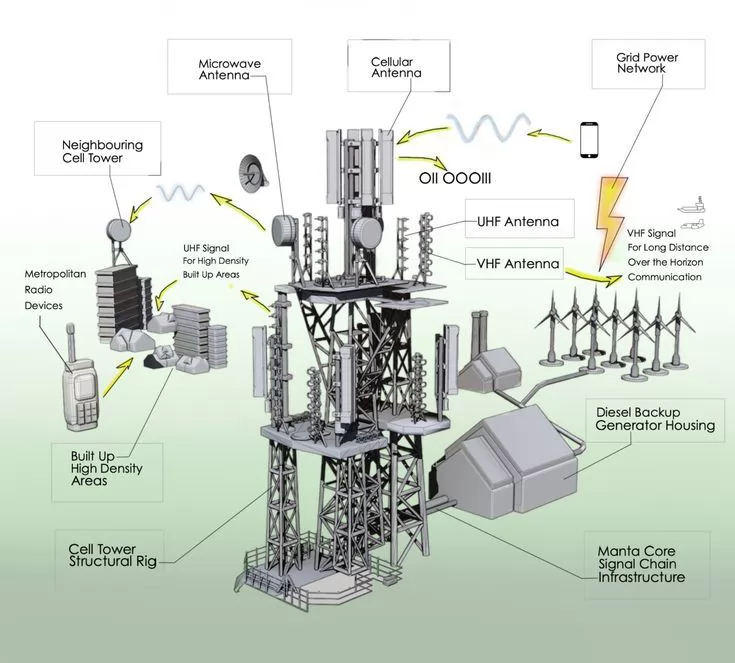
Although telecom towers may vary in design and appearance, most consist of several common components:
Tower Structure
The steel framework that provides height and structural stability. It may be lattice, tubular, or monopole in form.
Antennas
Mounted at different heights, antennas transmit and receive wireless signals for mobile networks and data communication.
Transmission Equipment
Includes radio units, cables, waveguides, and mounting brackets that connect antennas to base stations.
Foundation
A reinforced concrete foundation that anchors the tower to the ground and transfers structural loads safely.
Each of these components plays a crucial role in ensuring the safety, performance, and durability of a telecom tower over its service life.
There are several types of telecom towers, each designed to meet different environmental, technical, and economic requirements. Understanding these types helps network operators and project owners select the most suitable solution.
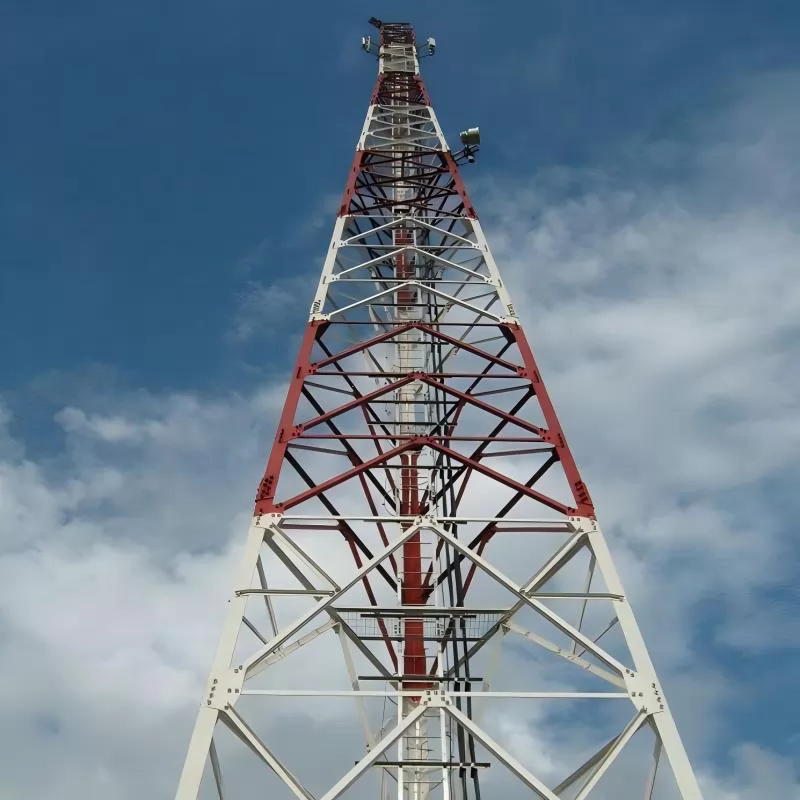
Lattice telecom towers are the most traditional and widely used type of telecom tower. They are typically constructed from angle steel sections assembled into a triangular or square framework.
Key features:
High structural strength and stability
Suitable for medium to very tall heights
Can carry multiple antennas and heavy equipment
Lattice towers are commonly used in rural areas, open fields, and locations where space is not a major constraint. Due to their structural efficiency, they are often preferred for large-scale telecom infrastructure projects.
A monopole telecom tower is a single tubular steel pole with antennas mounted at the top or along its height. This type of tower is popular in urban and suburban environments.
Key features:
Compact footprint
Clean and modern appearance
Faster installation compared to lattice towers
Monopole towers are ideal for city areas where land availability is limited and visual impact must be minimized. However, their height and load capacity are generally more limited compared to lattice towers.
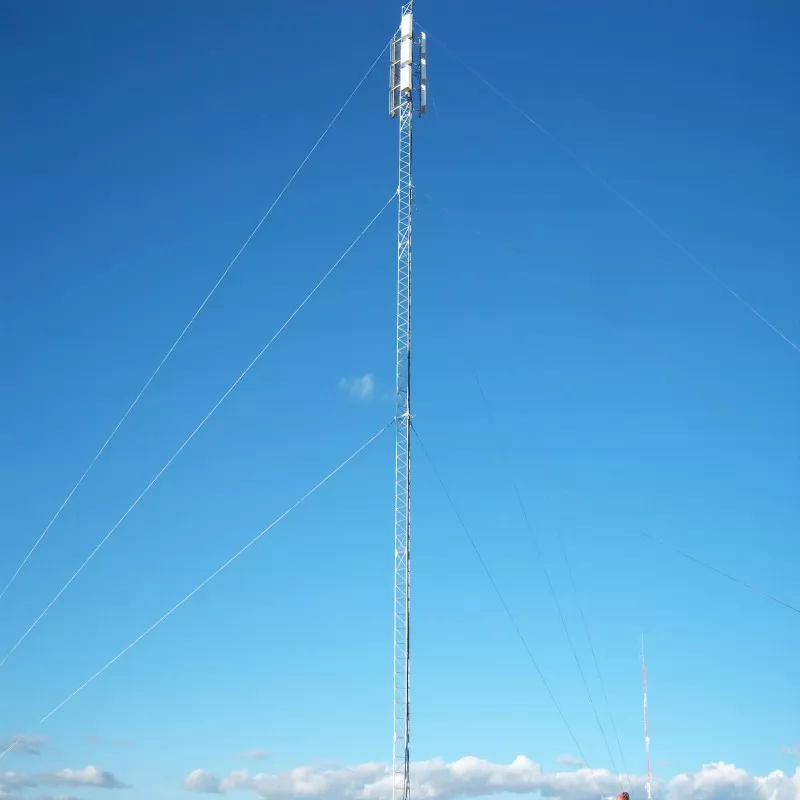
Guyed mast towers are tall, slender structures stabilized by steel guy wires anchored to the ground at multiple points.
Key features:
Capable of reaching very great heights
Lower steel consumption compared to self-supporting towers
Require large land area for guy wire anchoring
Guyed towers are often used for broadcasting, long-distance communication, and applications where extreme height is required.
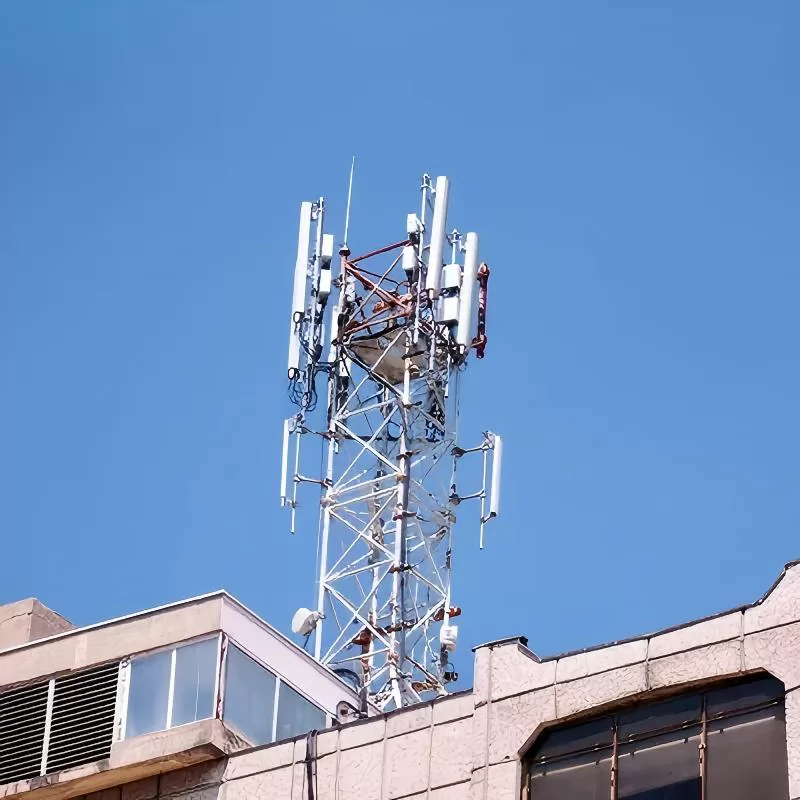
Rooftop telecom towers are installed on the roofs of existing buildings and are widely used in dense urban areas.
Key features:
No need for additional land acquisition
Ideal for enhancing network coverage in cities
Height is limited by building structure and regulations
Rooftop towers are commonly used to improve mobile signal coverage and capacity in high-traffic urban zones.
In areas where aesthetics or environmental considerations are important, camouflaged telecom towers are used. These towers are designed to blend into their surroundings, such as palm trees, flagpoles, or architectural elements.
They are often installed in residential areas, tourist destinations, or environmentally sensitive locations.
Telecom towers are a fundamental part of modern communication systems. Their importance goes far beyond supporting mobile phone calls.
Telecom towers form the backbone of mobile communication networks, including 4G LTE and 5G systems. By elevating antennas, towers enable wide-area signal coverage and seamless connectivity between mobile devices and base stations.
Without telecom towers, modern mobile networks would not be able to support high-speed data transmission, video streaming, or real-time communication.
In addition to mobile networks, telecom towers support:
Wireless internet access
Microwave communication links
Radio and television broadcasting
They enable reliable data transmission across cities, rural regions, and remote areas.
In urban areas, telecom towers help increase network capacity and manage high user density.
In rural and remote regions, tall telecom towers are essential for extending coverage over long distances where base stations are sparsely distributed.
Telecom towers are considered critical infrastructure because they support emergency communication, disaster response, and national connectivity. During natural disasters or emergencies, telecom towers play a vital role in maintaining communication networks.
Selecting a reliable telecom tower supplier is a key decision for any communication project.
When choosing a telecom tower manufacturer or supplier, consider the following:
Compliance with international standards
Quality of materials and fabrication
Ability to customize tower designs
Experience in export and international projects
Telecom tower projects require long-term reliability. Strong after-sales support, including technical assistance, installation guidance, and maintenance advice, is essential for ensuring stable operation throughout the tower’s service life.
XHTower is a professional telecom tower manufacturer and exporter, providing a wide range of telecom tower solutions for global markets.
XHTower offers:
Lattice towers, monopole towers, guyed masts, and rooftop towers
Engineering support and customization
Strict quality control and international standard compliance
Reliable export packaging and logistics
Beyond manufacturing, XHTower provides:
Technical documentation and installation guidance
After-sales support for operation and maintenance
Long-term cooperation for network expansion projects
With a focus on quality, reliability, and customer satisfaction, XHTower serves as a trusted partner for telecom infrastructure development.
A telecom tower is far more than a steel structure—it is a key enabler of modern communication. From mobile networks and wireless internet to emergency systems and smart cities, telecom towers support the connectivity that drives today’s digital world.
Understanding what telecom towers are, the different types available, and their role in communication networks helps project owners and operators make informed decisions. Choosing an experienced and reliable supplier like XHTower ensures that telecom tower projects are built for safety, durability, and long-term success.





Procurement guide for engineers sourcing radar towers: technical specs, supplier evaluation questions, RFQ checklist, and factory trial assembling explained. By XH Tower.


