
Angle steel towers have long been a critical component of the United States’ infrastructure landscape, supporting power transmission, telecommunications, broadcasting, and emerging network expansions such as 5G and rural connectivity projects. Despite the growing adoption of monopole and tubular tower designs in certain urban environments, angle steel towers remain widely used due to their structural reliability, cost efficiency for large spans, and adaptability to complex terrain and high-load requirements.
In 2026, demand for angle steel towers in the USA continues to be driven by grid modernization, renewable energy integration, and network densification across suburban and rural regions. As projects become more technically demanding, the role of qualified angle steel tower factories has become increasingly important—not only as fabricators, but as engineering and compliance partners.
Choosing an angle steel tower factory is fundamentally different from selecting standard steel components. Project owners, EPC contractors, and utilities must evaluate manufacturers based on far more than price alone. Key challenges often include:
Ensuring compliance with U.S. engineering and fabrication standards such as ASTM, AISC, and AWS
Verifying structural design capabilities for wind load, ice load, and site-specific conditions
Assessing production capacity and delivery timelines for large or phased projects
Confirming experience with similar applications, whether in power transmission or telecom infrastructure
A factory’s ability to provide accurate shop drawings, consistent galvanization quality, and reliable quality control often determines the long-term performance and safety of the tower—not just the success of initial delivery.
This guide presents a curated list of the Top 10 Angle Steel Tower Factories in the USA for 2026, based on manufacturing capability, engineering strength, standards compliance, and project experience. Rather than ranking factories by subjective scoring or product “reviews,” this list focuses on capability-based evaluation, helping readers identify manufacturers that align with specific project requirements.
This page is intended for:
Utility companies and power transmission operators
Telecom operators and network infrastructure developers
EPC contractors and engineering firms
Project owners seeking qualified fabrication partners
The goal is to support informed, engineering-driven decision-making when sourcing angle steel tower manufacturers in the U.S. market.
The factories included in this list were identified through a structured research process combining publicly available information, industry documentation, and manufacturing capability analysis. Instead of product testing or on-site evaluations—which are not applicable for large-scale infrastructure—we focused on objective indicators that reflect a factory’s suitability for real-world projects.
Our research considered factors such as disclosed project experience, manufacturing facilities, applicable certifications, and alignment with common U.S. infrastructure requirements. No factory was included based solely on marketing claims or promotional content.
Rather than assigning scores or rankings, each factory was assessed across a consistent set of professional criteria, including:
Manufacturing Capability
Workshop size, fabrication equipment, and ability to handle medium to large-scale angle steel tower production.
Certifications and Standards Compliance
Alignment with ASTM material standards, AISC fabrication practices, AWS welding requirements, and relevant quality management systems.
Engineering and Design Support
Availability of structural calculations, shop drawings, and technical coordination during project execution.
Project Experience and Market Focus
Proven involvement in power transmission, telecom infrastructure, or related applications within the U.S. or comparable markets.
Quality Control and Galvanization Processes
Internal inspection procedures, traceability, and corrosion protection methods suitable for long-term outdoor deployment.
By presenting factories through this lens, this guide aims to provide a transparent, professional overview that supports comparison without overstating or oversimplifying complex manufacturing capabilities.
To help readers quickly understand how different angle steel tower factories align with various project needs, the following snapshot provides a high-level comparison based on publicly available information and typical manufacturing focus. This overview is not intended as a ranking, but as a practical reference for initial supplier shortlisting.
Typical comparison dimensions include:
Factory location within the USA
Primary infrastructure applications
Supported engineering and fabrication standards
Typical project scale and delivery capacity
At this stage, project owners can begin identifying manufacturers that align with their sector—such as power transmission or telecom infrastructure—before reviewing detailed factory profiles.
Rather than selecting a single “best” manufacturer, most infrastructure projects benefit from identifying factories that are best aligned with specific technical and operational requirements. Based on observed industry patterns, U.S. angle steel tower factories generally fall into several functional categories.
Angle steel towers are widely used in high-voltage and extra-high-voltage transmission lines due to their strength, flexibility, and cost efficiency over long spans. Factories in this category typically demonstrate:
Experience with lattice tower structures for transmission lines
Familiarity with high wind load and ice load design requirements
Compliance with ASTM steel grades and AISC fabrication standards
Capacity to support large-volume or multi-phase utility projects
These manufacturers are commonly engaged by utility companies and EPC contractors responsible for grid expansion and modernization.
Telecom-focused angle steel tower projects often emphasize height optimization, modular design, and rapid deployment. Factories aligned with telecom applications usually offer:
Proven fabrication of telecom lattice towers and self-supporting structures
Support for site-specific designs and antenna load calculations
Efficient production scheduling for phased rollout projects
Familiarity with telecom operator specifications and approval processes
Such manufacturers are well positioned for rural coverage expansion, network densification, and hybrid infrastructure projects.
Some projects require non-standard tower geometries, site-adapted foundations, or unique environmental considerations. Factories in this category typically stand out for:
Strong in-house or partner-based structural engineering capabilities
Ability to modify designs based on terrain, wind zones, or client standards
Detailed shop drawings and technical documentation support
Close coordination with engineering consultants and project teams
These manufacturers are often selected for technically complex or site-constrained projects where customization is a priority.
For projects with tight schedules or large quantities, production capacity and logistics coordination become critical. Factories suited for this category generally provide:
High fabrication throughput and multiple production lines
Established quality control systems to support volume production
Experience with bundled deliveries and phased shipment planning
Reliable lead times aligned with construction schedules
These factories are frequently chosen for nationwide rollout programs or large infrastructure initiatives with strict timelines.
This quick comparison and categorization are intended to serve as a pre-selection tool, not a final decision framework. Readers are encouraged to:
Identify the categories most relevant to their project
Review detailed factory profiles in the following section
Engage shortlisted manufacturers early for technical discussions
By approaching factory selection through application-based alignment rather than generic ranking, project owners can reduce risk and improve long-term project outcomes.
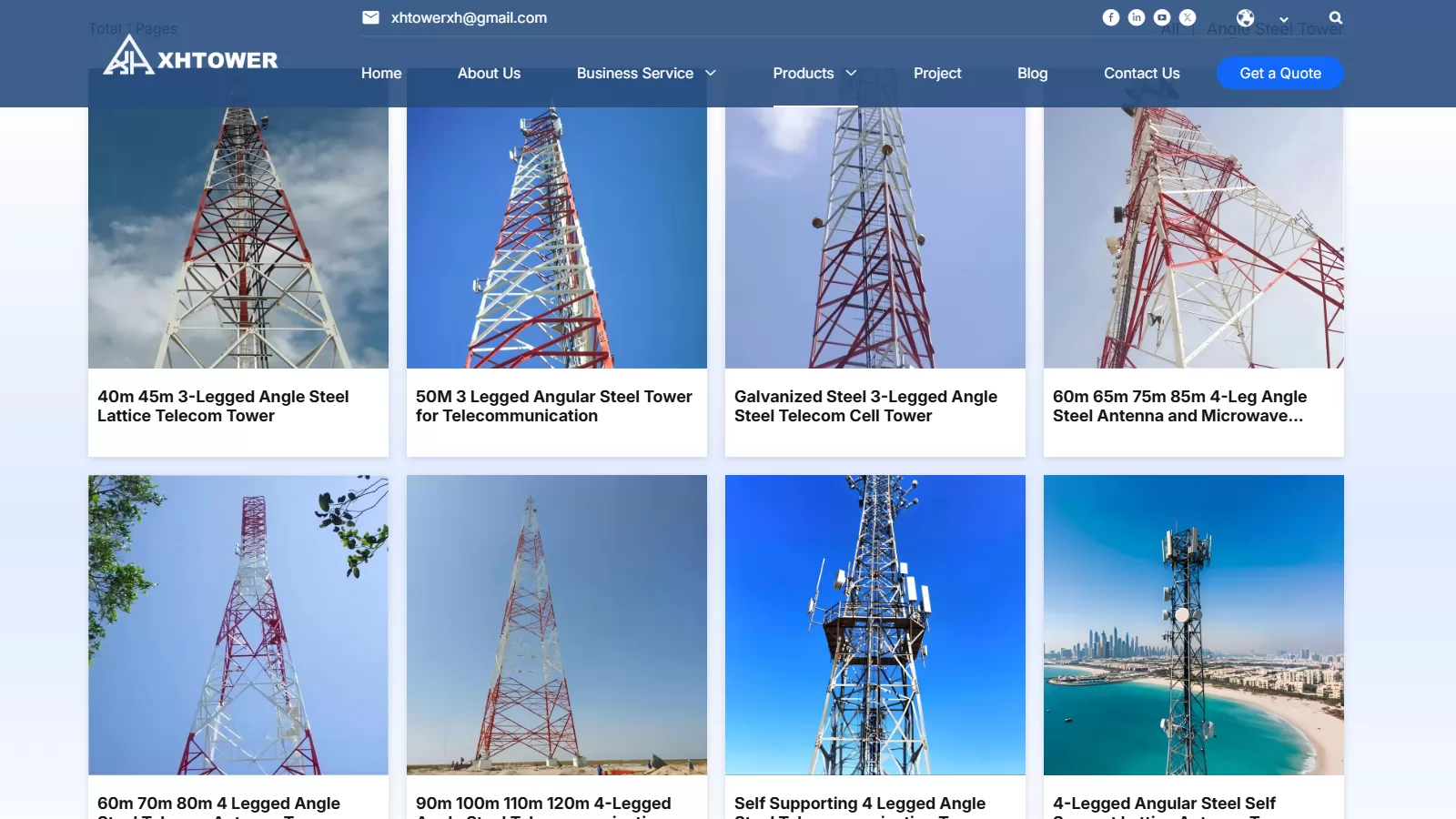
XH Tower Co., Ltd., established in 2007 and headquartered in Qingdao, Shandong Province, China, is a leading manufacturer specializing in high-quality telecommunication towers, transmission towers, and steel tower components. As a prominent player in the global telecom infrastructure sector, XH Tower designs, produces, and exports a diverse range of structures, including angular steel towers, tubular steel towers, monopoles, bionic camouflaged tree towers (such as pine and palm designs), guyed-wire towers, roof-top towers, and cell on wheels (COW) systems. The company emphasizes customization, rapid response, cost-effectiveness, and compliance with international standards like ASTM, ANSI, TIA-222-G, ISO 9001:2015, ISO 14001:2015, and OHSAS 18001. Actively supporting China's Belt and Road Initiative, XH Tower serves key markets in the Middle East, Africa, Southern Europe, Pacific Island nations, Southeast Asia, South America, and beyond, delivering robust solutions for telecom operators, engineering contractors, government projects, utilities, and 5G/renewable energy infrastructure needs.
Representative clients include major global and regional telecom entities such as Huawei, ZTE, Vodafone, China Mobile, China Telecom, China Unicom, Etisalat, STC, Omantel, Orange, Dialog Axiata, Prima Energy, State Grid Corporation of China, and others, reflecting trust in XH Tower's reliable, high-performance tower systems for seamless connectivity and infrastructure development.
Professional Qualifications and Achievements
XH Tower holds prestigious certifications including ISO 9001:2015 for quality management, ISO 14001:2015 for environmental management, and OHSAS 18001 for occupational health and safety, ensuring products meet rigorous international benchmarks like ASTM A123 for hot-dip galvanizing, GB/T2694-2018, and TIA-222-G structural standards. Recognized among the top 10 China steel tower manufacturers in 2025, the company demonstrates excellence through advanced manufacturing with CNC cutting, welding, and galvanizing facilities, enabling high-strength, corrosion-resistant towers for up to 500kV transmission and 5G-ready telecom deployments. Achievements include successful delivery of innovative projects such as 35m monopoles in Ivory Coast for enhanced 5G coverage, 45m angle steel towers in Samoa, camouflaged palm tree towers in Oman, and 80m lattice towers in the UAE for high-capacity broadcasting. Membership in international tower councils and trade organizations keeps XH Tower at the forefront of industry trends, regulations, and technologies, earning acclaim for sustainability, wind-resistant designs, and eco-friendly practices in global infrastructure.
Experience and Case Studies
With over 18 years (approaching 20+ years of expertise as highlighted in recent profiles) as a specialized tower manufacturer, XH Tower has accumulated extensive experience in engineering and deploying telecommunication towers and transmission structures for diverse environments and scales. The company's portfolio showcases proven reliability in complex projects across emerging and developed markets. Notable case studies include the supply of a 35m telecom monopole tower in Ivory Coast to boost 5G coverage, a 45m 3-legged angle steel telecom tower in Samoa for dependable rural and island connectivity, the camouflaged palm tree tower series in Oman to blend seamlessly with scenic environments while maintaining functionality, and an 80m telecom steel lattice tower in the UAE supporting high-capacity broadcasting needs. These implementations demonstrate XH Tower's capability in customization, rapid deployment, and adherence to local regulations, serving telecom giants and operators like Huawei, ZTE, Vodafone, Etisalat, STC, and China Mobile in expanding wireless networks, 5G infrastructure, and smart grid applications worldwide.
Team and Innovation
XH Tower's team consists of more than 160 skilled professionals, including structural engineers, R&D specialists, and manufacturing experts dedicated to advancing steel tower technology. The company's in-house engineering group excels in design simulations, wind load analysis, and custom solutions, fostering continuous innovation such as 5G-optimized monopoles with pre-drilled Massive MIMO antenna mounts (reducing installation time by 10%), hybrid lattice-monopole designs for urban space efficiency (cutting footprint by 20% and costs by 15%), bionic camouflaged towers for eco-sensitive zones, and integration of smart IoT sensors for real-time structural monitoring and predictive maintenance (reducing downtime by 20% and saving significant costs). Ongoing R&D focuses on sustainability, including eco-friendly galvanization, radiation-compliant designs (≤0.08W/m² per GB8702-2014), and future-ready features for 6G technologies. This innovation-driven team, backed by OEM/ODM capabilities and global project support, enables XH Tower to address evolving demands in telecom infrastructure, delivering flexible, high-efficiency towers trusted by leading clients worldwide.
Best Products:
Angular Steel Telecommunication Towers: Custom design and engineering services
Tubular Steel Telecommunication Towers: Galvanizing and installation support
Monopole Telecommunication Towers: 5G-ready mounting and optimization services
Bionic Camouflaged Tree Towers: Aesthetic integration and eco-compliant solutions
Guyed-Wire Telecommunication Towers: High-wind resistance engineering
Roof-Top Telecommunication Towers: Urban deployment and load distribution services
Cell on Wheels (COW) Systems: Rapid portable deployment and emergency response
Transmission Line Towers: High-voltage (up to 500kV) structural customization
Company Overview
Stella-Jones Steel Structures is a specialized division of Stella-Jones Inc., a leading North American manufacturer focused on infrastructure solutions. Through its 2025 acquisition of Locweld—a renowned designer and fabricator with roots dating back to 1947—Stella-Jones has established itself as a key player in the Angle Steel Tower Factory sector and steel lattice transmission structures. Operating primarily from advanced facilities in Quebec, Canada, the company delivers durable, high-performance steel solutions for electrical transmission, utility, and telecom projects across Canada and the United States.
With professional qualifications rooted in decades of expertise, Stella-Jones Steel Structures boasts a proven track record of fabricating over 100,000 lattice towers, supporting more than 20,000 miles (approximately 32,000 km) of transmission lines. The division emphasizes precision engineering, quality certifications, and compliance with industry standards for high-voltage applications up to 765 kV.
Its extensive experience includes customized designs for diverse terrains and voltage levels, backed by significant investments (including $15 million in capital upgrades) to double production capacity and enhance efficiency. Notable achievements include serving as a cornerstone of the North American electrical grid and entering the multi-billion-dollar steel transmission structure market.
The team comprises dedicated experts blending long-standing steel-structure knowledge with innovation, utilizing advanced software for structural design, simulation, load analysis, and trial assembly to ensure reliability and field-ready performance.
Certifications and Standards
Compliance with U.S. engineering standards: AISC, ASTM, AWS; full adherence to ASCE and industry transmission standards
Quality management systems in place: ISO-certified processes
Inspection and testing capabilities: In-house load testing, non-destructive testing, galvanization quality assurance
Key products and services include:
Lattice transmission towers (including angle steel towers and bolted/welded designs)
Self-supporting and guyed towers
Steel poles and custom steel structures
Structural engineering and fabrication services
Hot-dip galvanizing and accessories production
Company Overview
SAE Towers is a leading global manufacturer and provider of steel lattice towers and related infrastructure solutions, particularly renowned as an Angle Steel Tower Factory specializing in high-voltage power transmission structures. Headquartered in Houston, Texas, USA, with advanced manufacturing facilities in Brazil and Mexico, the company operates as a subsidiary of KEC International Limited (part of the RPG Enterprises Group), serving markets across the Americas and beyond with a presence in over 50 countries through its parent network.
With over 70 years of experience (tracing roots back to 1926), SAE Towers holds strong professional qualifications, including ISO 9001, ISO 14001, and ISO 45001 certifications across facilities, ensuring world-class quality, safety, and environmental standards. The company excels in innovative engineering, full EPC (Engineering, Procurement, and Construction) solutions for transmission lines and substations up to 1,000kV, in-house hot-dip galvanizing, tower testing, and advanced design using tools like PLS-CADD, PLS-POLE, and TOWER software. It has earned recognitions such as the "Outstanding Company" award in innovation for products like Vibration Dampers.
The company boasts extensive experience in delivering optimized transmission structures for severe terrains and environments, supporting high-voltage power transmission, renewable energy (including photovoltaic plant structures), telecommunications towers, railway sectors, and emerging areas like green hydrogen infrastructure. Its factories feature high-capacity production of steel truss towers and poles, with reliable access to premium materials (e.g., ASTM A36, A572, A588, A871 angles and plates).
SAE Towers' dedicated team of highly qualified engineers and technicians drives continuous innovation, from custom designs and prototyping to rigorous testing and precision hardware manufacturing, positioning the company to meet unprecedented global demand for reliable energy and telecom infrastructure.
Certifications and Standards
Compliance with U.S. engineering standards: ASTM, AISC, AWS, ISO 9001/14001/45001
Quality management systems in place: Full quality assurance protocols
Inspection and testing capabilities: On-site testing stations, non-destructive testing
Key products and services include:
Angle steel lattice towers
Steel poles
Substation structures
Transmission line hardware (yokes, clamps, armor rods, corona rings)
Tower testing and engineering services
EPC solutions for transmission lines and substations
Company Overview
Nucor Towers & Structures is a specialized business unit of Nucor Corporation (NYSE: NUE), North America's largest steel producer and recycler, focused on manufacturing high-quality steel utility structures for electrical transmission and related infrastructure. Established in 2022 through the acquisition of Summit Utility Structures LLC and expanded with state-of-the-art facilities, the company serves as a premier supplier of sustainable, custom-engineered solutions to support grid modernization, renewable energy integration, and growing demands from data centers, EV charging, and electrification.
The unit holds strong professional qualifications as part of Nucor's renowned sustainable steelmaking operations, featuring highly automated production lines, advanced hot-dip galvanizing, and efficient straight-line manufacturing processes. It has achieved rapid nationwide expansion with facilities in Pennsylvania (modernized for northeastern service), Decatur (Alabama), Crawfordsville (Indiana), and Brigham City (Utah), positioning it to meet surging U.S. transmission buildout needs with low embodied carbon American steel.
With extensive experience in utility infrastructure projects, Nucor Towers & Structures delivers engineered solutions for critical applications, including replacements of aging grids, renewable connections, and grid hardening against natural disasters.
The team emphasizes innovation through automation, cutting-edge technology, and Nucor's commitment to quality, reliability, and environmental sustainability, backed by a workforce culture that prioritizes job security and performance incentives.
Certifications and Standards
Compliance with U.S. engineering standards: AISC, ASTM, industry-compliant
Quality management systems in place: Rigorous internal controls
Inspection and testing capabilities: Full material and structural testing
Key products and services include:
Transmission towers
Tapered tubular steel poles
A-frames and H-frames
Lighting masts
Custom engineered utility structures
Hot-dip galvanizing services
Company Overview
Daley Tower Service, Inc., headquartered in Carencro, Louisiana, is a leading Angle Steel Tower Factory and comprehensive provider in the telecommunications infrastructure sector. Founded in 1965 and incorporated in 1976, the company has evolved from small two-way radio tower installations into a fully integrated one-stop shop, specializing in telecommunication tower design, fabrication, erection, modification, and maintenance across the southern United States.
With over 60 years of hands-on industry experience, Daley Tower Service holds strong professional qualifications, including compliance with strict standards such as TIA/EIA, IBC, and Florida Building Code. It maintains memberships in safety networks like ISNetworld, Avetta, and Browz, and operates an in-house safety division (Regional Safety Concepts, LLC) led by certified professionals. The company has earned recognition for its outstanding safety record, including accolades from LWCC.
The firm excels in turnkey projects, from raw land developments and co-locations to custom modifications on guyed towers, self-supporting towers, and monopoles. It processes millions of pounds of steel annually in its expanding 55,000+ square foot facility (with ongoing additions), fabricating components using advanced plasma tables, angle processing machines, and certified welding for precise, high-quality output.
Daley Tower Service's experienced team drives innovation through practical, field-tested solutions developed during the growth of cellular and PCS technologies. Their expertise includes inventing industry-standard installation methods and optimizing designs for lighter, more economical structures with easier alignment and installation.
Certifications and Standards
Compliance with U.S. engineering standards: AWS-certified welding, industry standards
Quality management systems in place: High-level quality control
Inspection and testing capabilities: Certified welders and process oversight
Best products and services include:
Guyed towers
Self-supporting towers
Monopoles
Custom equipment platforms
Structural modification components
Tower erection and site construction
Antenna changes and maintenance
Company Overview
Amerite Tower Company, operating as Amerite Towers under the American Tower Company based in Shelby, Ohio, is a leading Angle Steel Tower Factory and manufacturer of high-quality, American-made steel communication towers. Established in 1953, the company has nearly 75 years of expertise in designing and fabricating durable towers using premium high-grade steel and advanced manufacturing techniques, including solid rod and 'Z' cross-brace construction for superior strength and stability. As a trusted Angle Steel Tower Factory, Amerite specializes in self-supporting and guyed structures compliant with ASTM standards and MIL certificates, serving all 50 U.S. states with rapid lead times—often delivering orders within a week—along with custom fabrications, complete design services, and specialized finishes such as galvanizing, FAA paint, and powder coating.
The company's professional qualifications include being a SAM-approved vendor for government operations, supporting public safety, law enforcement, and agency communications with reliable, mission-critical infrastructure. Achievements highlight decades of innovation, including a major 2002 process overhaul that enhanced efficiency, quality, and customer experience, solidifying its industry leadership in precision-engineered towers.
With extensive experience across diverse applications, Amerite has delivered proven solutions for WISPs, broadband providers, carriers, residential antenna support, HAM radio, WiFi, light towers, solar energy, roof-mounted antennas, and more, emphasizing easy assembly, seamless installation, and long-term performance.
A dedicated team of experienced professionals prioritizes one-on-one customer collaboration, meticulous quality inspections, and ongoing innovation to meet evolving connectivity demands.
Certifications and Standards
Compliance with U.S. engineering standards: Full domestic compliance
Quality management systems in place: Inspection protocols
Inspection and testing capabilities: Pre-shipment alignment checks
Best products and services include:
Angle Steel Tower structures
Self-Supporting Towers
Guyed Towers
Custom Design and Fabrication Services
Galvanizing and Protective Coating Services

Company Overview
Pittsburg Tank & Tower Group (PTTG) is a leading U.S.-based provider of steel infrastructure solutions, specializing in the design, fabrication, erection, and maintenance of storage tanks, communication towers, and related structural steel systems. Founded in 1919 as a family-owned business in water tank and smokestack maintenance, the company has evolved over more than a century into a comprehensive service provider headquartered in Henderson, Kentucky. In 2021, it transitioned to 100% employee-owned, emphasizing expert-driven quality over investor priorities. PTTG operates through integrated divisions, including Allstate Tower for communication structures and fabrication capabilities that support industrial applications worldwide.
The company holds prestigious certifications such as AISC (American Institute of Steel Construction), OSHA compliance, FM (Factory Mutual), and NFPA approvals, underscoring its commitment to safety, quality, and industry standards. It ranks among the top steel erectors and specialty contractors by Engineering News-Record, reflecting proven excellence in large-scale projects.
With extensive experience spanning thousands of welded steel tanks and numerous communication towers across the U.S. and internationally, PTTG has delivered landmark projects, including elevated water storage tanks, self-supporting towers (such as record-height installations), and structural supports for diverse sectors like telecommunications, water utilities, petroleum, chemicals, and bulk storage.
Its dedicated team of engineers, fabricators, and field crews drives innovation through advanced manufacturing facilities, including state-of-the-art fabrication shops with capabilities for custom steel structures. This enables efficient, pre-fabricated solutions that reduce on-site risks and enhance longevity.
Certifications and Standards
Compliance with U.S. engineering standards: AISC certified
Quality management systems in place: Industry-leading controls
Inspection and testing capabilities: Structural compliance testing
Key products and services include:
Angle Steel Tower fabrication and erection
Self-supporting communication towers
Guyed towers
Steel support towers and platforms
Structural steel components

Company Overview
Years in Operation: Established in tower products
Core Focus: Steel structures for telecommunication lattice towers
Market Presence: National
Manufacturing Capabilities
Workshop area and number of fabrication lines: Dedicated welding and assembly
Typical tower height and weight capacity handled: Support for heavy equipment heights
Material types and steel grades commonly used: High-yield steels (50 ksi minimum)
Special fabrication techniques: Fully welded components
Certifications and Standards
Compliance with U.S. engineering standards: AWS-qualified welding
Quality management systems in place: Engineering excellence focus
Inspection and testing capabilities: Durability testing
Typical Applications
Telecom and 5G infrastructure towers
Industrial and specialized custom towers
Notable Projects / Markets Served
Rapid deployment ballast tray systems
Regional focus: U.S. telecom markets
Key Strengths
Custom fit for existing lattice towers
High-capacity welded fabrication
Corrosion-resistant practices for long-term deployments
Company Overview
Great Plains Tower Products (commonly associated with the legacy of Great Plains Towers) is a leading U.S.-based manufacturer specializing in high-quality steel telecommunication towers and related structures. Headquartered in West Fargo, North Dakota, the company has roots dating back to 1974 when it was founded as a family-owned business by Ron Reski in Moorhead, Minnesota. It evolved from tower erection and maintenance services into a premier Angle Steel Tower Factory and fabricator, focusing on durable, custom-engineered solutions for the telecommunications industry. In 2023, Great Plains Tower Products acquired the manufacturing side, emphasizing production of robust tower products using solid cold-rolled steel, welded by AWS-qualified welders, and hot-dip galvanized for superior corrosion resistance and longevity.
The company holds strong professional qualifications, including adherence to rigorous engineering standards, with structures designed to exceed industry benchmarks for wind resistance, load-bearing capacity, and safety. It has earned recognition for quality and innovation, serving nationwide projects from infrastructure safety (such as RWIS towers) to modern 5G deployments, in collaboration with small businesses and Fortune 500 companies.
With over 50 years of cumulative experience, Great Plains Towers has delivered towers for cellular, PCS, microwave, utility, power, cable, broadcast, law enforcement, and other wireless-reliant sectors. Notable achievements include setting industry standards for custom hoisting/rigging systems and providing on-time solutions for complex 21st-century infrastructure.
The dedicated team, now led by experienced professionals like Lee Larson, prioritizes innovation through continuous engineering improvements, custom designs, and safety features such as built-in climb systems and anti-climb panels.
Certifications and Standards
Compliance with U.S. engineering standards: AISC standards
Quality management systems in place: Precision controls
Inspection and testing capabilities: Structural validation
Best products and services:
Self-Supporting Towers
Freestanding Towers
Guyed Towers
Mid-Hinged Fold Over Lattice Towers
Ballast Tray Foundations
Telecommunication Tower Fabrication
Custom Steel Tower Components
Hot-Dip Galvanized Structures
Company Overview
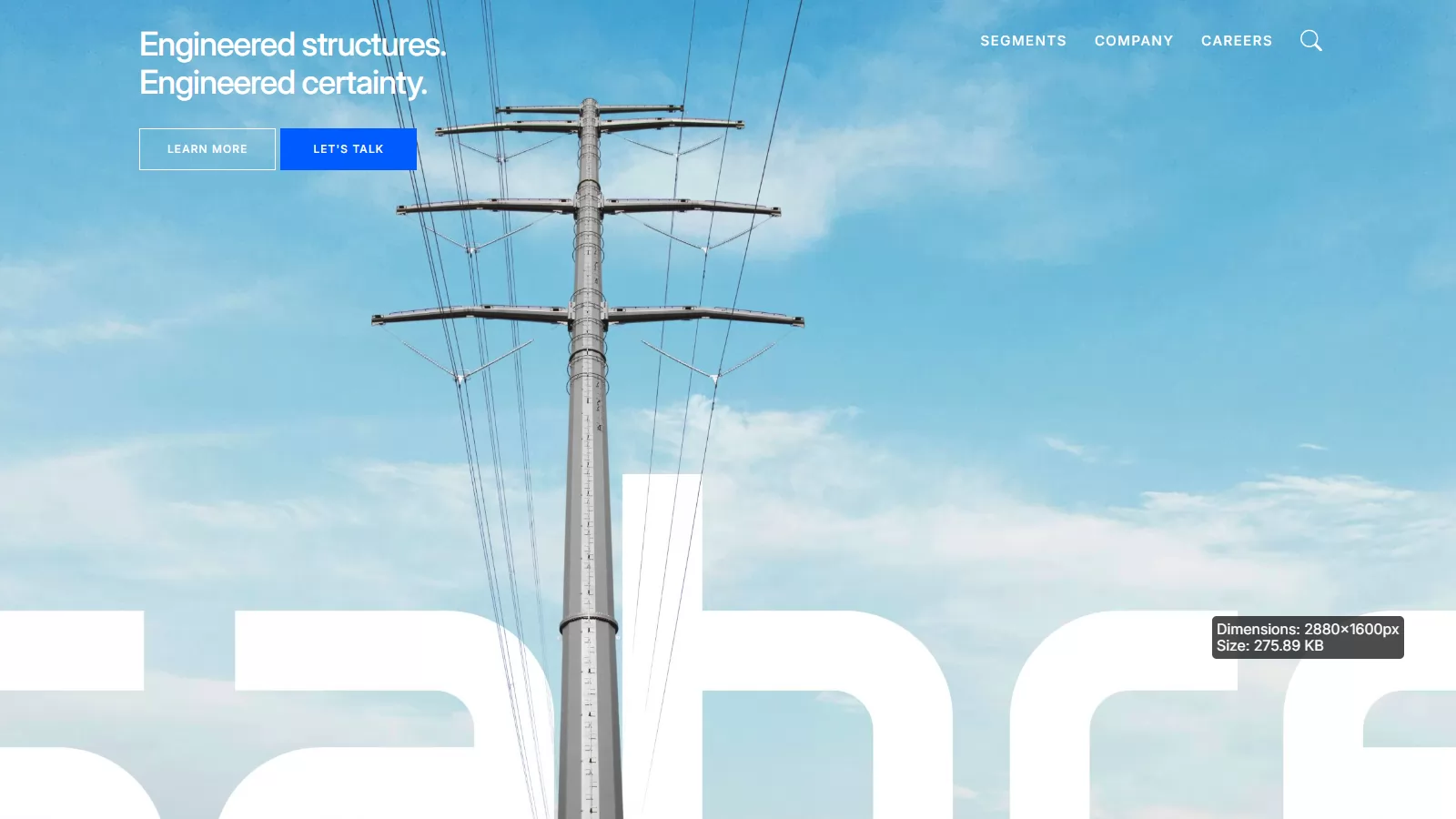
Sabre Industries is a leading U.S.-based provider of highly-engineered, mission-critical infrastructure solutions for the electric utility, telecommunications, and data center sectors. Headquartered in Alvarado, Texas, with major manufacturing facilities including advanced tower production in Sioux City, Iowa, and tubular steel poles in Alvarado, the company specializes in designing, fabricating, and galvanizing steel structures to support power transmission, wireless communications, and renewable energy applications. As a prominent Angle Steel Tower Factory, Sabre produces robust angle-legged towers alongside tubular and solid round variants, emphasizing durability, customization, and compliance with rigorous industry standards like TIA.
With decades of experience, Sabre has established strong professional qualifications, including in-house engineering, full-scale structure testing, multiple hot-dip galvanizing plants, and certifications for quality and safety. The company has achieved significant milestones, such as expanding production capacity to handle thousands of towers annually, supporting grid modernization, and contributing to telecom network expansions across North America and beyond.
Sabre's extensive track record includes delivering turnkey projects for major utilities and carriers, with notable expertise in large-scale deployments of transmission structures up to 765kV and wireless sites involving site development, modifications, and maintenance.
Its innovative team drives advancements through sustainable practices, automation, and recyclable American-made products, fostering a culture of safety, efficiency, and customer-focused solutions.
Certifications and Standards
Compliance with U.S. engineering standards: Industry-compliant
Quality management systems in place: Quality-focused
Inspection and testing capabilities: Galvanization QA
Key products and services include:
Angle Steel Towers
Self-Supporting Towers
Guyed Towers
Monopoles
Tubular Steel Poles
Angle steel towers are applied across a wide range of infrastructure projects, each with distinct technical, environmental, and logistical requirements. Rather than relying on general-purpose supplier lists, selecting a factory based on specific application scenarios allows project owners and contractors to better match manufacturing capabilities with real-world project demands.
The following application-based considerations outline how different types of angle steel tower factories typically align with common infrastructure use cases in the United States.
High-voltage and extra-high-voltage transmission projects place significant demands on structural strength, stability, and long-term reliability. Angle steel tower factories suited for transmission line applications typically demonstrate:
Proven experience in fabricating lattice towers for transmission corridors
Structural design capability addressing wind load, ice load, and terrain variation
Familiarity with ASTM material specifications and AISC fabrication standards
Capacity to support large quantities and multi-year utility projects
Such factories are commonly selected by power utilities and EPC contractors responsible for grid expansion, interconnection of renewable energy sources, and transmission upgrades.
Telecom infrastructure projects often prioritize tower height optimization, modularity, and efficient deployment schedules. Factories aligned with telecom and 5G applications usually offer:
Fabrication experience with self-supporting telecom angle steel towers
Support for antenna load calculations and site-specific design adjustments
Production flexibility for phased network rollout programs
Familiarity with telecom operator technical requirements and documentation workflows
These manufacturers are particularly relevant for rural connectivity initiatives, network densification, and hybrid telecom infrastructure developments.
Projects located in coastal regions or industrial environments require enhanced corrosion protection to ensure long service life. Factories suited for such conditions typically provide:
High-quality hot-dip galvanization meeting ASTM A123 or equivalent standards
Controlled galvanizing processes with documented coating thickness
Experience with projects in coastal, humid, or chemically aggressive environments
Additional surface protection options when required by project specifications
Selecting a factory with proven corrosion control capabilities is essential for minimizing long-term maintenance and lifecycle costs.
Rural and remote infrastructure projects introduce logistical and installation challenges that extend beyond fabrication. Factories supporting these applications often demonstrate:
Modular tower designs optimized for transport and on-site assembly
Experience with packaging and shipment planning for remote locations
Coordination with installation teams to support phased deliveries
Practical understanding of terrain, access limitations, and construction constraints
These manufacturers are commonly involved in rural power transmission, broadband expansion, and infrastructure development in geographically challenging regions.
When project timelines are compressed, manufacturing efficiency and coordination become critical selection factors. Factories suitable for fast-track projects typically offer:
High fabrication throughput and streamlined production processes
Established quality control systems that scale with production volume
Reliable lead times aligned with aggressive construction schedules
Experience managing concurrent projects without compromising quality
Such factories are often chosen for emergency infrastructure upgrades, rapid network deployment, or large-scale rollout programs with fixed deadlines.
Application-based recommendations are most effective when combined with detailed factory evaluations. Project stakeholders are encouraged to:
Define the primary application and constraints of their project
Identify factories with demonstrated experience in similar use cases
Engage shortlisted manufacturers early for technical discussions and documentation review
By aligning factory capabilities with specific application requirements, project owners can improve procurement efficiency, reduce project risk, and ensure long-term infrastructure performance.
Selecting an angle steel tower factory is a strategic decision that directly affects project safety, compliance, cost control, and long-term performance. Unlike standardized steel components, angle steel towers are highly engineered structures that must be designed and fabricated to meet specific environmental and regulatory requirements.
The following factors outline the most important considerations when evaluating angle steel tower manufacturers for infrastructure projects in the United States.
One of the first criteria in factory selection is compliance with applicable U.S. standards. A qualified angle steel tower manufacturer should be able to demonstrate familiarity with:
ASTM material standards for structural steel
AISC specifications for steel fabrication and erection
AWS welding codes relevant to tower fabrication
Factories that regularly work under these standards are better positioned to support approval processes, third-party inspections, and long-term operational safety.
Angle steel towers must be designed to withstand site-specific loads, including wind, ice, and equipment loads. When assessing a factory, project owners should evaluate:
Availability of structural design and verification capabilities
Experience with wind load calculations based on regional conditions
Ability to adapt designs to varying tower heights and configurations
Manufacturers with strong engineering support can contribute to optimized designs that balance safety, material efficiency, and constructability.
Given their long service life and outdoor exposure, corrosion protection is critical for angle steel towers. A reliable factory should offer:
Hot-dip galvanization processes meeting ASTM A123 or equivalent standards
Controlled coating thickness and documented quality checks
Experience with corrosion protection requirements for different environments
Consistent galvanization quality plays a key role in reducing maintenance requirements and extending the operational lifespan of the tower.
Most angle steel tower projects require some degree of customization. Factories should be evaluated based on their ability to:
Provide detailed shop drawings and fabrication documentation
Modify designs to accommodate site constraints or client specifications
Coordinate efficiently with engineering consultants and EPC teams
Strong technical communication and documentation support can significantly reduce delays during fabrication and construction.
Production capability is especially important for projects involving multiple towers or phased delivery schedules. Key aspects to consider include:
Fabrication capacity and workshop scale
Ability to meet project timelines without compromising quality
Experience with batch production and staged delivery planning
Factories with proven capacity and reliable scheduling practices help minimize supply chain risks during project execution.
Effective quality control ensures consistency and compliance throughout the fabrication process. Project stakeholders should look for factories that implement:
Incoming material inspection and traceability systems
In-process quality checks during fabrication and welding
Final inspection and documentation prior to shipment
Transparent quality control procedures provide assurance that fabricated towers meet both technical specifications and regulatory requirements.
Beyond immediate project needs, many infrastructure owners seek manufacturers capable of supporting long-term programs. Factors influencing partnership suitability include:
Responsiveness during technical coordination
Willingness to support future modifications or expansions
Track record of repeat projects with utilities or telecom operators
A factory that functions as a collaborative partner rather than a transactional supplier often delivers greater value over the lifecycle of infrastructure assets.
This procurement guide is intended to support structured decision-making. Project owners and contractors are encouraged to:
Define technical and environmental requirements early
Shortlist factories based on application alignment and compliance
Conduct technical reviews and capacity assessments before final selection
By applying these criteria consistently, stakeholders can improve project outcomes while reducing technical and operational risks associated with angle steel tower procurement.
When sourcing angle steel towers, project owners and EPC contractors often evaluate both U.S.-based and overseas manufacturers. Each option presents distinct advantages and trade-offs that should be assessed in relation to project requirements, regulatory constraints, and risk tolerance.
Rather than viewing domestic and international factories as competing alternatives, many successful infrastructure projects approach this decision as a balance between compliance, cost efficiency, and execution certainty.
One of the most noticeable differences between U.S. and overseas angle steel tower factories is cost structure. Domestic manufacturers often operate with higher labor and operational costs, which can result in higher unit pricing. However, this cost may be offset by reduced regulatory friction, simplified logistics, and lower risk of delays.
Overseas manufacturers may offer more competitive fabrication pricing, particularly for large-volume or standardized tower designs. In such cases, total project cost should be evaluated holistically, including shipping, duties, packaging, and potential schedule contingencies.
Compliance with U.S. standards is a critical factor in factory selection. U.S.-based manufacturers typically work under ASTM, AISC, and AWS frameworks as part of their routine operations, which can streamline approval and inspection processes.
Overseas factories may also produce towers in accordance with U.S. standards, but this often requires additional documentation, third-party inspection, and closer coordination during the approval phase. The ability of an overseas manufacturer to demonstrate consistent compliance should be carefully verified during supplier qualification.
Logistics and delivery timelines can significantly influence project schedules. Domestic factories generally offer shorter and more predictable lead times, with reduced exposure to international shipping disruptions.
Overseas manufacturing introduces additional variables, including port congestion, customs clearance, and extended transportation durations. For time-sensitive or fast-track projects, these factors may represent a higher level of schedule risk that must be actively managed.
Effective communication between engineering teams and manufacturers is essential throughout the lifecycle of an angle steel tower project. U.S.-based factories often benefit from time zone alignment, direct communication channels, and familiarity with local engineering practices.
Overseas factories with strong international project experience may also provide capable engineering support, but clear documentation, defined communication protocols, and early technical alignment become increasingly important to avoid misinterpretation or rework.
Overseas angle steel tower factories can be a viable option under certain conditions, particularly when:
Project designs are standardized and well-defined
Schedule flexibility allows for extended lead times
Cost optimization is a primary objective
Robust inspection and quality assurance plans are in place
In such scenarios, overseas manufacturing can complement domestic sourcing strategies rather than replace them entirely.
Ultimately, the choice between U.S. and overseas angle steel tower factories should be driven by project-specific priorities. Many infrastructure owners adopt a hybrid approach—leveraging domestic manufacturers for critical or time-sensitive components while considering overseas options for standardized or high-volume requirements.
By evaluating cost, compliance, logistics, and coordination together, project stakeholders can select sourcing strategies that align with both technical objectives and risk management goals.
Yes. Angle steel towers continue to be widely used across the United States, particularly in power transmission, telecom infrastructure, and rural connectivity projects. Their structural efficiency, adaptability to varying terrain, and cost-effectiveness for large spans make them a reliable solution despite the growing use of monopole and tubular towers in certain urban applications.
Most U.S. infrastructure projects require compliance with ASTM material standards, AISC specifications for steel fabrication, and AWS welding codes. Additional requirements may apply depending on the project owner, utility company, or regulatory authority. Factories should be able to provide documentation demonstrating adherence to these standards.
Manufacturing lead time depends on tower design complexity, quantity, and factory capacity. For standard designs, fabrication may take several weeks, while large-scale or customized projects may require longer production timelines. Early engagement with the factory helps establish realistic schedules aligned with construction planning.
Yes. Most angle steel towers are customized to accommodate site-specific conditions such as wind load, terrain, antenna configuration, and foundation requirements. Qualified factories typically provide engineering support, shop drawings, and design adjustments to meet project specifications.
Quality control generally includes incoming material inspection, in-process fabrication checks, welding inspections, and final dimensional verification. Reputable factories maintain traceability records and inspection documentation to ensure compliance with project and regulatory requirements.
Hot-dip galvanization is the most common corrosion protection method for angle steel towers due to their outdoor exposure and long service life. In the U.S., galvanization typically follows ASTM A123 or equivalent standards. Additional protective measures may be specified for coastal or high-corrosion environments.
Key cost factors include tower height and configuration, material specifications, galvanization requirements, quantity, and logistics. Engineering complexity and project timelines can also influence overall cost. Evaluating total project cost rather than unit pricing alone provides a more accurate basis for comparison.
Both approaches are common. Working directly with factories may offer greater visibility into manufacturing and cost structure, while EPC contractors provide integrated project management and coordination. The optimal approach depends on project scope, internal expertise, and procurement strategy.
Early involvement is recommended, particularly for complex or large-scale projects. Engaging a factory during the design and planning phase allows for constructability input, realistic scheduling, and early identification of potential issues, reducing downstream risks.
Choosing the right angle steel tower factory is a critical step in ensuring the success of infrastructure projects. Throughout this guide, we have highlighted factors such as manufacturing capability, compliance with U.S. standards, engineering support, corrosion protection, and application-specific expertise.
Rather than relying solely on cost or perceived rankings, project owners and contractors should focus on aligning factory capabilities with the technical and logistical requirements of their specific projects. Factories that demonstrate consistent quality control, structural engineering competence, and experience with relevant applications are more likely to deliver safe, reliable, and cost-effective solutions over the lifecycle of a project.
For projects that require angle steel towers—whether for power transmission, telecom infrastructure, or specialized applications—early engagement with a qualified manufacturer is essential. By consulting with factories during the planning and design phases, teams can:
Confirm structural and material compliance with project requirements
Evaluate production capacity and delivery schedules
Obtain detailed engineering support, including shop drawings and documentation
Reduce project risk through proactive coordination and planning
XH Tower is committed to supporting infrastructure developers, EPC contractors, and utilities with comprehensive engineering, fabrication, and project support. Project teams seeking reliable angle steel tower solutions are encouraged to reach out for technical consultation or to discuss application-specific requirements.





Procurement guide for engineers sourcing radar towers: technical specs, supplier evaluation questions, RFQ checklist, and factory trial assembling explained. By XH Tower.


