
Temporary coverage, emergency recovery, or semi-permanent rural expansion — choosing the right mobile telecom infrastructure can significantly impact your deployment speed, operational cost, and long-term network stability.
Two common solutions dominate this space:
Cellular on Wheels (COW)
Movable Telecom Cabins
While both are mobile telecom deployment systems, they are designed for very different operational strategies.
This guide will help network operators, infrastructure providers, and project engineers understand:
What a Cellular on Wheels (COW) really is
What makes a movable telecom cabin different
When each solution performs best
Which option offers better lifecycle value


A Cellular on Wheels (COW) is a portable cell site mounted on a trailer platform. It typically includes:
A telescopic or hydraulic mast
Antennas and RRUs
A diesel generator
Compact baseband equipment
Stabilizing outriggers
COWs are designed for rapid deployment — often within a few hours.
Large public events (concerts, sports tournaments)
Disaster recovery after hurricanes or earthquakes
Temporary capacity boost during peak traffic
Short-term construction bypass
Because they are trailer-based, COW units can be towed by a standard vehicle and repositioned quickly.
Extremely fast deployment
Fully self-contained system
Ideal for short-duration coverage
Minimal civil work required
High fuel consumption (diesel-dependent)
Limited structural stability in high-wind zones
Not cost-efficient for long-term deployment
Restricted equipment expansion capacity
COWs are optimized for speed, not permanence.
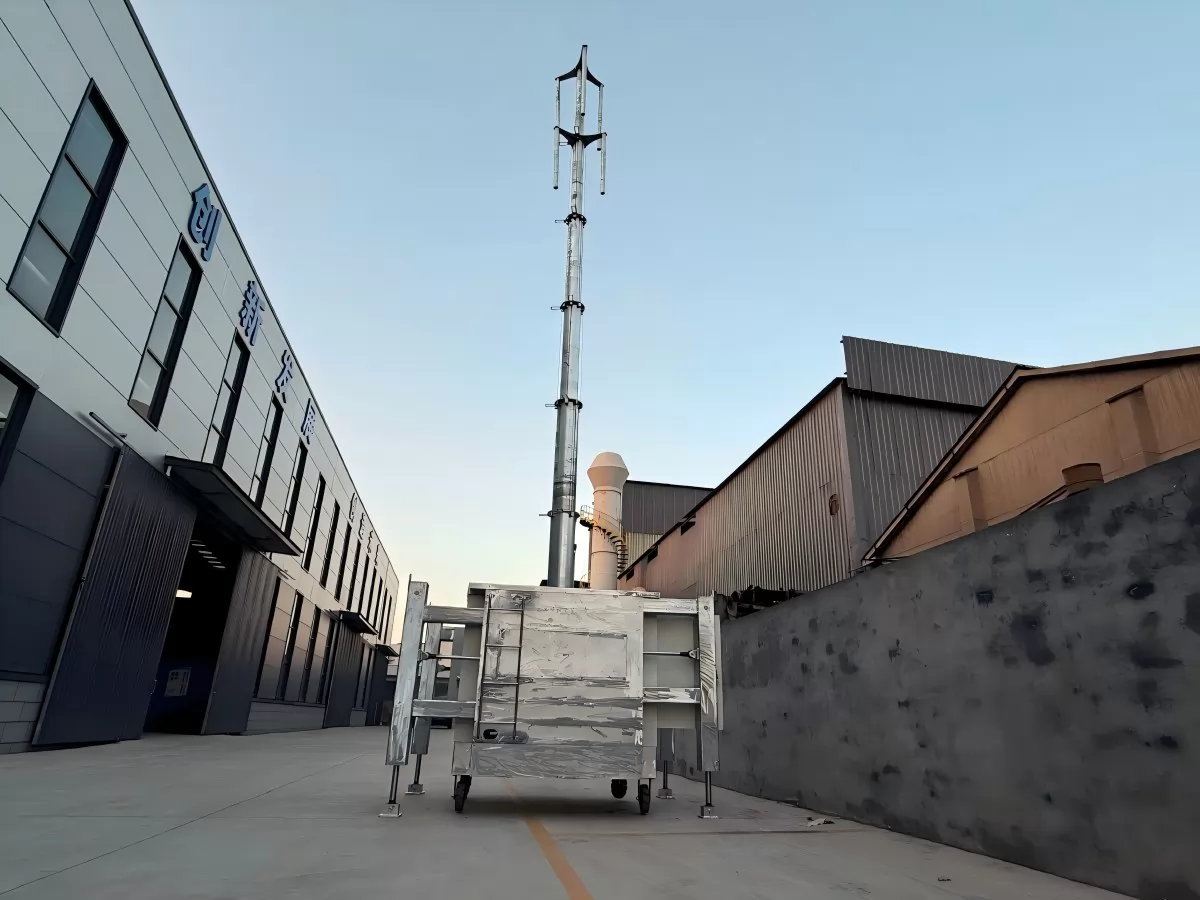
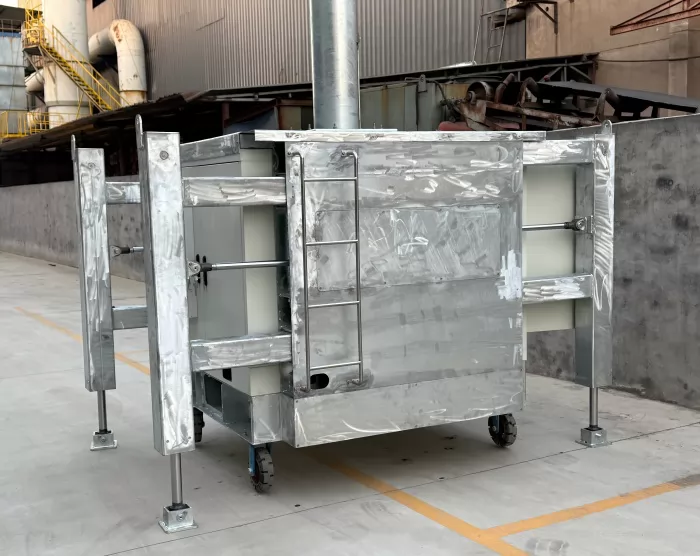
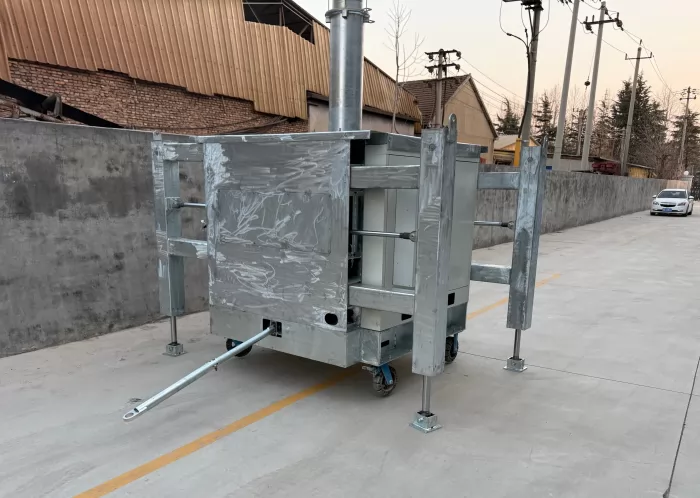
A Movable Telecom Cabin is a prefabricated equipment shelter designed for semi-permanent or relocatable deployment.
Unlike trailer-based COW systems, movable cabins:
Are placed on prepared foundations or compacted ground
Can be lifted by crane or forklift
Support full-scale telecom equipment integration
Allow advanced power and cooling configurations
They function more like a relocatable telecom base station shelter than a temporary trailer.
Structural insulated steel cabin
Integrated power distribution system
Battery banks (often lithium-compatible)
HVAC or intelligent cooling system
Cable management and grounding system
Movable telecom cabins can be relocated when necessary, but they are built to operate stably for:
3 months
1–3 years
Or even longer in rural projects
They bridge the gap between:
Temporary COW deployment and Permanent concrete telecom buildings.
| Feature | Cellular on Wheels (COW) | Movable Telecom Cabin |
|---|---|---|
| Mobility Type | Trailer-based | Crane/Forklift relocation |
| Deployment Time | Hours | 1–2 days |
| Power Source | Diesel generator | Grid / Hybrid / Solar-ready |
| Wind Resistance | Moderate | High |
| Expansion Capability | Limited | Scalable |
| Long-Term Suitability | Low | High |
At a glance:
COW = Speed-focused
Movable Cabin = Stability + Lifecycle-focused
Most comparisons stop at “pros and cons.”
But infrastructure buyers make decisions based on deployment duration, terrain conditions, and lifecycle cost — not marketing bullet points.
Below is a scenario-driven decision matrix to help operators choose correctly.
| Deployment Scenario | Cellular on Wheels (COW) | Movable Telecom Cabin | Recommended Choice |
|---|---|---|---|
| 3–7 Day Event | ✅ Ideal | ❌ Overbuilt | COW |
| 1–2 Month Emergency Recovery | ✅ Fast start | ⚠️ Consider transition | Hybrid Strategy |
| 3–12 Month Rural Expansion | ⚠️ High fuel cost | ✅ Stable & efficient | Movable Cabin |
| Remote Mining / Oil Field | ❌ High OPEX | ✅ Durable & scalable | Movable Cabin |
| Urban Temporary Construction | ✅ Quick | ⚠️ Depends on duration | Case-Based |
| Seasonal Tourism Area | ⚠️ Fuel intensive | ✅ Cost controlled | Movable Cabin |
The biggest mistake buyers make:
Using a Cellular on Wheels system for deployments exceeding 60–90 days.
Why?
Because diesel-driven temporary systems accumulate:
Continuous fuel costs
Generator maintenance expenses
Frequent on-site servicing
Logistics complexity
What feels flexible at day 1 becomes expensive by month 6.
Movable telecom cabins are engineered for mid- to long-term operation, reducing recurring operational pressure.
This is where decision-makers should focus.
| Cost Element | COW | Movable Cabin |
|---|---|---|
| Equipment Base | Lower | Medium |
| Civil Preparation | Minimal | Light foundation |
| Transportation | Simple towing | Crane or truck |
COW typically has lower upfront entry cost.
But CAPEX tells only part of the story.
| Operating Factor | COW | Movable Cabin |
|---|---|---|
| Fuel Consumption | High | Low |
| Generator Maintenance | Frequent | Reduced |
| Battery Integration | Limited | Advanced |
| Cooling Efficiency | Basic | Industrial HVAC |
| Remote Monitoring | Often basic | Fully integrated |
Most Cellular on Wheels units rely heavily on diesel generators.
That means:
Fuel supply logistics
Price volatility exposure
Environmental impact
Noise constraints in urban areas
Movable telecom cabins can integrate:
Grid power
Hybrid solar systems
Lithium battery storage
Smart cooling optimization
Over 6–12 months, the difference becomes substantial.
If deployment < 30 days → COW is economical
If deployment > 90 days → Movable Cabin often delivers lower total lifecycle cost
This is the decision threshold most operators use.
Mobility is not only about wheels.
It is about:
Wind resistance
Structural fatigue
Load-bearing capacity
Expansion capability

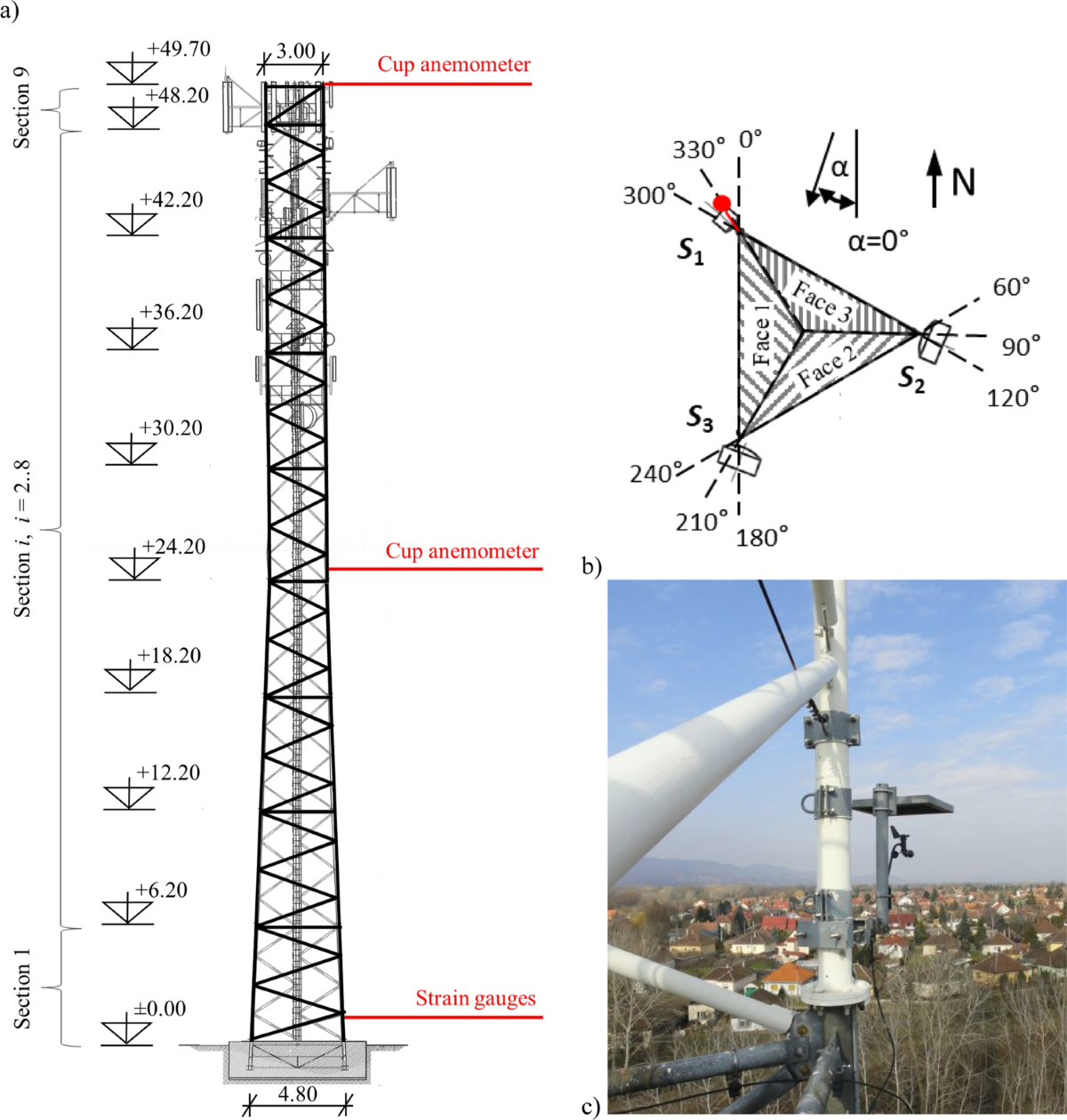
Characteristics:
Telescopic mast
Trailer stabilization outriggers
Limited structural reinforcement
Designed for rapid retractability
Advantages:
Quick relocation
Minimal site work
Constraints:
Reduced wind tolerance
Limited additional equipment mounting
Mast height restrictions


Characteristics:
Reinforced steel frame
Crane lifting points
Anchor bolt foundation compatibility
High wind load resistance
Mobility remains possible — but the system prioritizes:
Structural integrity
Equipment protection
Long-term operational resilience
For projects in:
Coastal regions
High-temperature zones
Dust-heavy environments
Remote rural areas
Movable cabins offer significantly higher reliability.
Telecom uptime depends on thermal management and energy strategy.
Diesel generator primary power
Limited battery buffer
Compact cooling units
Short operational autonomy without refueling
Suitable for:
Events
Emergency bursts
Temporary demand spikes
Grid-ready or hybrid-ready
Large lithium battery banks
Industrial HVAC systems
Intelligent airflow management
Optional solar integration
These systems are engineered for:
Continuous 24/7 operation
High ambient temperature environments
Remote monitoring integration
This significantly improves:
Equipment lifespan
Energy efficiency
Maintenance intervals
One often overlooked factor when comparing Cellular on Wheels (COW) and Movable Telecom Cabins is regulatory approval.
Deployment speed is not only a technical issue — it is also a compliance issue.
Because COW units are classified as temporary infrastructure in many regions, they may:
Require simplified permits
Be exempt from full structural approval
Avoid permanent zoning classification
Be deployed faster in emergency scenarios
This makes COW ideal for:
Disaster response
Short-term public events
Temporary urban congestion relief
However, these regulatory advantages often expire if the system remains on-site beyond the “temporary” definition (which varies by country).
Movable telecom cabins are typically treated as semi-permanent infrastructure.
They may require:
Foundation approval
Electrical compliance inspection
Environmental noise compliance
Wind-load certification
However, once approved, they provide:
Greater legal stability
Fewer redeployment constraints
Lower long-term compliance risk
For deployments exceeding 3–6 months, movable cabins often align better with regulatory expectations.
Choose COW if your project requires:
Deployment within hours
Coverage for less than 30–60 days
Rapid emergency communication restoration
Temporary event network expansion
Minimal site preparation
COW excels at:
Speed
Flexibility
Short-term capacity relief
It is a rapid-response tool.
Choose a movable telecom cabin if your project involves:
3+ months of operation
Rural or remote area coverage
Harsh environmental conditions
Long-term OPEX optimization
Scalable equipment expansion
Movable cabins excel at:
Stability
Energy efficiency
Lifecycle cost control
Infrastructure integration
They are built for sustainable network expansion.
Leading network operators increasingly use a hybrid model:
Deploy a Cellular on Wheels (COW) for rapid activation.
Assess long-term traffic demand.
Replace or complement the COW with a Movable Telecom Cabin integrated with:
Hybrid power systems
Higher battery capacity
Permanent or semi-permanent tower structures
This strategy:
Minimizes downtime
Controls long-term fuel cost
Maintains operational flexibility
Rather than choosing one over the other, the smart approach is often phased deployment.
Cellular on Wheels (COW) is a trailer-based temporary mobile cell site designed for short-term deployment.
A movable telecom cabin is a prefabricated equipment shelter designed for semi-permanent or relocatable installation with greater structural stability and power integration.
Technically, a COW can operate for months if maintained properly. However, fuel logistics and generator wear make long-term deployment costly and operationally complex.
Yes. While not trailer-based, movable cabins are designed with lifting points and structural reinforcement for crane relocation when needed.
For deployments under 30 days, COW is typically more economical.
For deployments exceeding 90 days, movable telecom cabins often provide lower total cost of ownership due to reduced fuel and maintenance expenses.
In many semi-permanent scenarios, yes.
However, for rapid emergency response, COW remains unmatched in deployment speed.
To simplify your selection:
| Deployment Duration | Recommended Solution |
|---|---|
| 0–30 Days | Cellular on Wheels (COW) |
| 30–90 Days | Case-Based / Hybrid |
| 90+ Days | Movable Telecom Cabin |
If your priority is speed → Choose COW.
If your priority is long-term efficiency → Choose Movable Cabin.
If your priority is both → Use a phased hybrid strategy.
Cellular on Wheels systems solve immediate coverage challenges.
Movable Telecom Cabins solve long-term infrastructure stability and cost control.
Understanding your deployment timeline, environmental conditions, and energy strategy will determine the correct investment — not just the initial price tag.
For operators planning semi-permanent expansion, energy-efficient rural coverage, or cost-controlled remote deployment, movable telecom cabins provide a scalable alternative to prolonged COW usage.





Discover the key differences between Movable Telecom Cabins and Traditional Cellular on Wheels (COW) in our comprehensive buyer's guide. Make informed decisions today!


Learn what a telecom tower is, the main types of telecom towers, and how telecom towers support modern mobile and wireless communication networks. Discover how to choose a reliable telecom tower supplier.

Discover how telecommunication towers are engineered to withstand wind loads, height challenges, and comply with international structural standards. Learn about tower slenderness, deflection limits, material selection, and design best practices for safe and durable telecom infrastructure.


