
Over the past two decades, telecom tower structures have evolved rapidly. Tubular towers and monopoles are often associated with modern urban skylines, while angle steel towers are sometimes perceived as “traditional” solutions. However, despite the rise of newer structures, angle steel towers remain a dominant choice in many telecom, broadcasting, and power transmission projects worldwide.
The reason is not habit or cost alone. In high-load, high-wind, complex terrain, and multi-antenna scenarios, angle steel towers continue to outperform alternatives in terms of structural stability, adaptability, and long-term reliability.
For project owners and engineers, the real question is not whether angle steel towers are old-fashioned, but why they are still irreplaceable in specific engineering conditions.
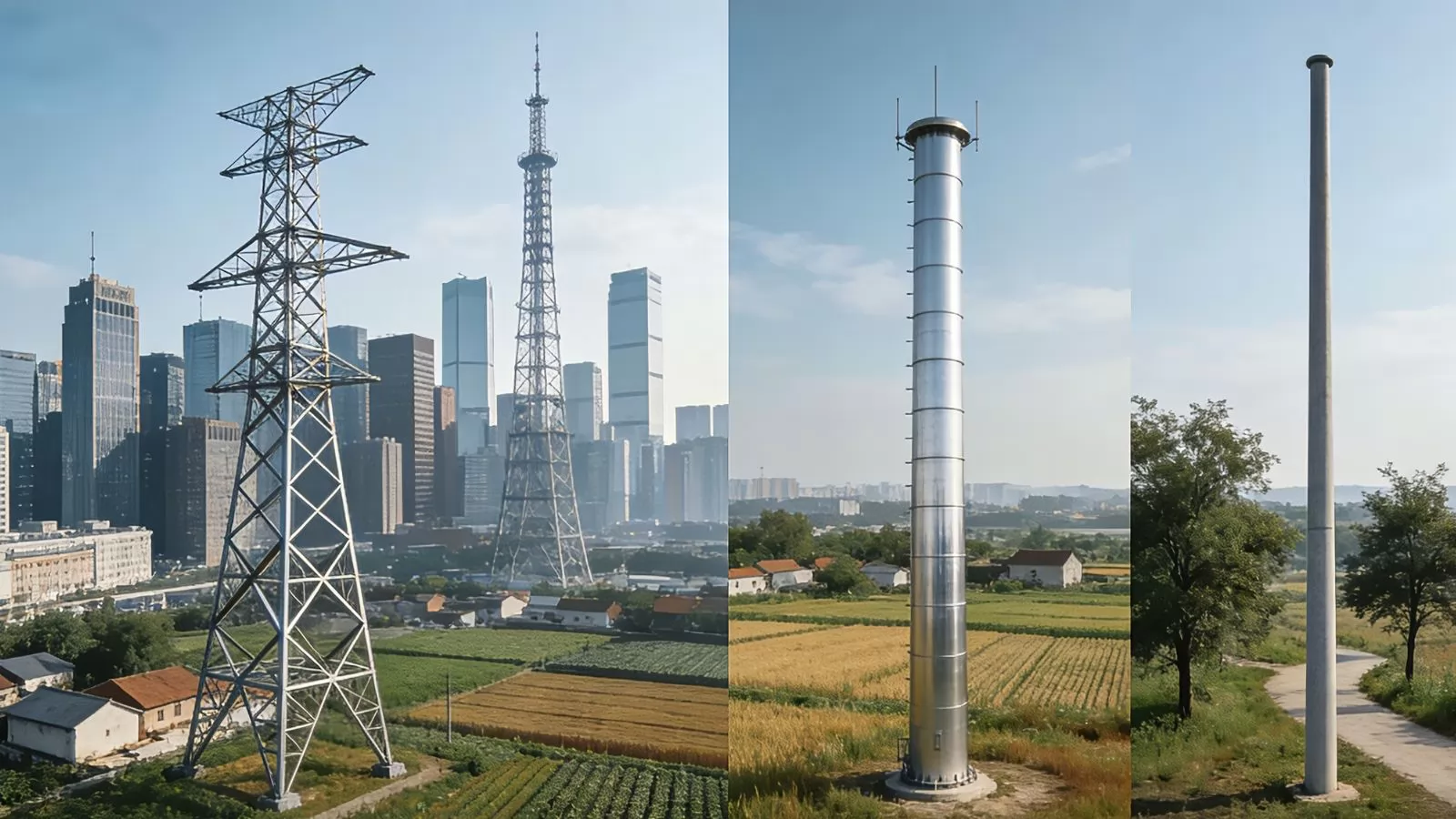
An angle steel tower is a self-supporting lattice steel tower structure assembled from galvanized angle steel members connected by bolts. The tower transfers vertical and horizontal loads through a triangulated framework into the foundation, creating a highly efficient load path.
Unlike tubular or monopole towers that rely on single or hollow sections, angle steel towers distribute forces across multiple members. This structural logic offers three fundamental advantages:
Redundant load paths, improving overall safety
Higher tolerance to uneven stress, especially under wind or ice loads
Ease of modular assembly, even in remote areas
3-leg angle steel towers are often used where space is limited or loads are moderate. They offer material efficiency but require precise foundation design.
4-leg angle steel towers provide superior stability and are widely used for heavy antenna loads, higher heights, and harsh environments.
The choice is not cosmetic—it directly affects wind resistance, foundation cost, and long-term maintenance.
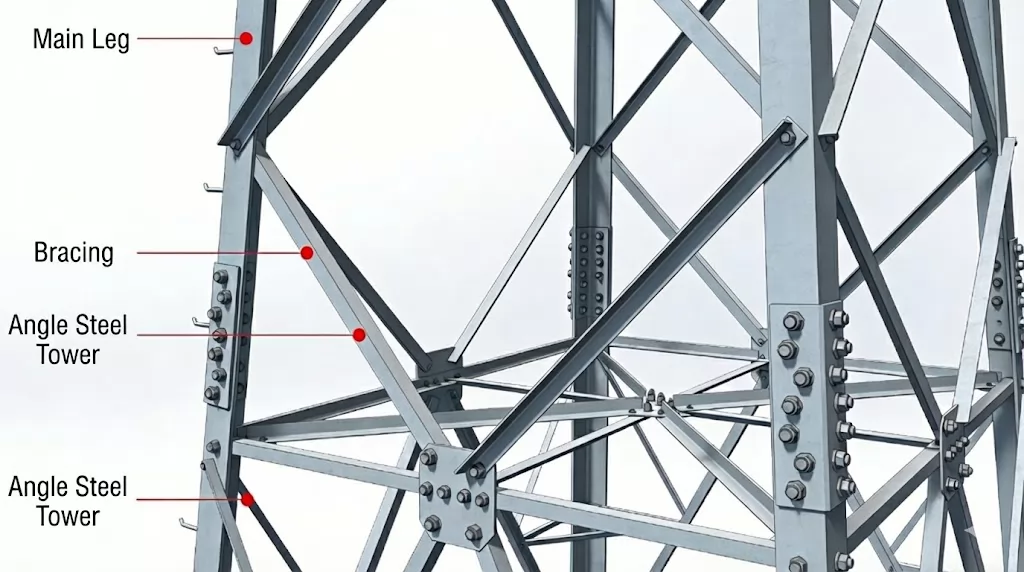
Not all angle steel towers perform the same. Their reliability depends on several critical design parameters that should be evaluated before procurement.
As height increases, wind pressure grows exponentially. Proper design must align tower height with regional wind speed standards, ensuring adequate safety margins.
A tower designed for a single operator may fail prematurely when multiple antennas or future upgrades are added. Load calculations must consider:
Antenna weight
Wind area
Mounting height
Future expansion
Soil conditions, slope, and seismic activity directly influence foundation type and cost. A well-designed angle steel tower integrates structural and geotechnical considerations from the start.
Reliable designs typically follow recognized standards such as:
ANSI / TIA (North America)
EN standards (Europe)
GB standards (China and international projects)
Compliance ensures structural safety and regulatory acceptance.
The performance of an angle steel tower is determined not only by design, but also by manufacturing quality.
Common materials include Q235, Q355, ASTM A36, and equivalent grades. Material traceability and mechanical properties are essential to ensure consistent performance.
Precision cutting and punching ensure proper alignment during assembly. Poor dimensional accuracy can lead to stress concentration and reduced fatigue life.
Hot-dip galvanizing in accordance with ASTM A123 or equivalent standards is critical for corrosion protection. Galvanizing thickness, surface preparation, and inspection directly impact service life.
Effective manufacturers implement:
Dimensional inspection
Bolt and connection verification
Galvanizing thickness testing
Pre-assembly trials for complex structures
These steps are often invisible but vital.
Rather than asking which tower type is “better,” a more useful question is which one fits your project conditions.
| Factor | Angle Steel Tower | Tubular Tower | Monopole |
|---|---|---|---|
| Load capacity | Excellent | Good | Limited |
| Wind resistance | Very high | High | Moderate |
| Installation flexibility | High | Medium | Low |
| Lifecycle cost | Balanced | Medium | High |
| Terrain adaptability | Excellent | Good | Limited |
Angle steel towers are especially suitable for projects where load, wind, and adaptability outweigh aesthetic considerations.
Angle steel towers remain the optimal solution in several key scenarios:
Rural and remote telecom networks, where transportation and assembly flexibility are critical
High-wind or ice-prone regions, requiring superior structural stability
Multi-operator shared towers, supporting heavy and diverse antenna loads
Hybrid telecom and power transmission projects, demanding robust load performance
In these environments, reliability often matters more than appearance.
Even experienced buyers can make costly mistakes when evaluating angle steel towers.
Focusing only on price per ton, ignoring design optimization and lifecycle cost
Overlooking galvanizing thickness, leading to premature corrosion
Underestimating foundation complexity, especially in poor soil conditions
Choosing the wrong leg configuration, affecting stability and maintenance
Avoiding these pitfalls can significantly reduce long-term risk.
Selecting the right manufacturer is as important as selecting the right tower type.
Key evaluation criteria include:
Proven engineering and design capability
Compliance with international standards
Transparent quality control processes
Experience with export and overseas projects
Ability to provide customized solutions and technical support
A reliable partner contributes to project success beyond manufacturing alone.
Angle steel towers are not always the most compact or visually discreet option. However, for projects demanding high load capacity, structural resilience, and long-term reliability, they remain one of the most trusted solutions in the global telecom industry.
If your project involves challenging terrain, high wind loads, or future expansion plans, an angle steel tower may offer the best balance between safety, performance, and lifecycle value.
To ensure optimal results, working with an experienced manufacturer is essential. XH Tower provides custom-engineered angle steel towers, adhering to international standards, with full technical support and proven project experience worldwide. Whether you need design consultation, load calculations, or turnkey supply solutions, XH Tower can help ensure your telecom infrastructure is safe, reliable, and cost-effective.





Procurement guide for engineers sourcing radar towers: technical specs, supplier evaluation questions, RFQ checklist, and factory trial assembling explained. By XH Tower.


