



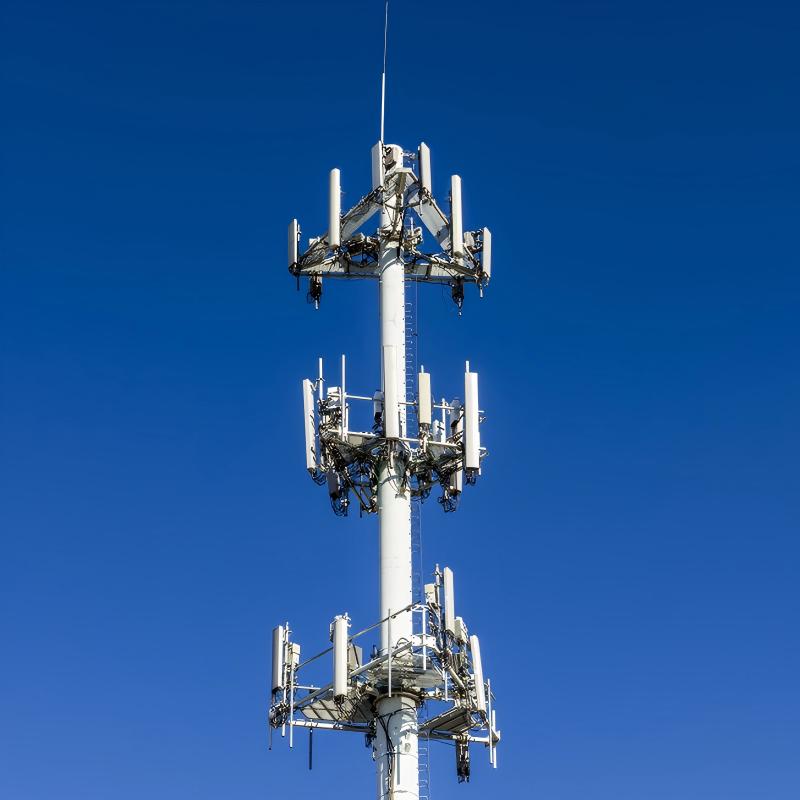
The high-efficiency tubular design for Macro Cell and 5G deployment.
Utilizing high-strength Q355/Q420 steel plates, rolled into tapered polygonal or circular sections. Features slip-joint connections for fast, precise assembly and an aesthetically pleasing, slender profile suitable for suburban environments.
Key Specifications
Structural Type: Tapered Polygonal/Circular
Steel Grade: Q355B/Q420 (ASTM A572 Gr.50/65)
Connection: Overlapping Slip-Joint System
Height Range: 30 – 80 meters
Best for: Macro Cell Sites, Standard Urban/Suburban Coverage
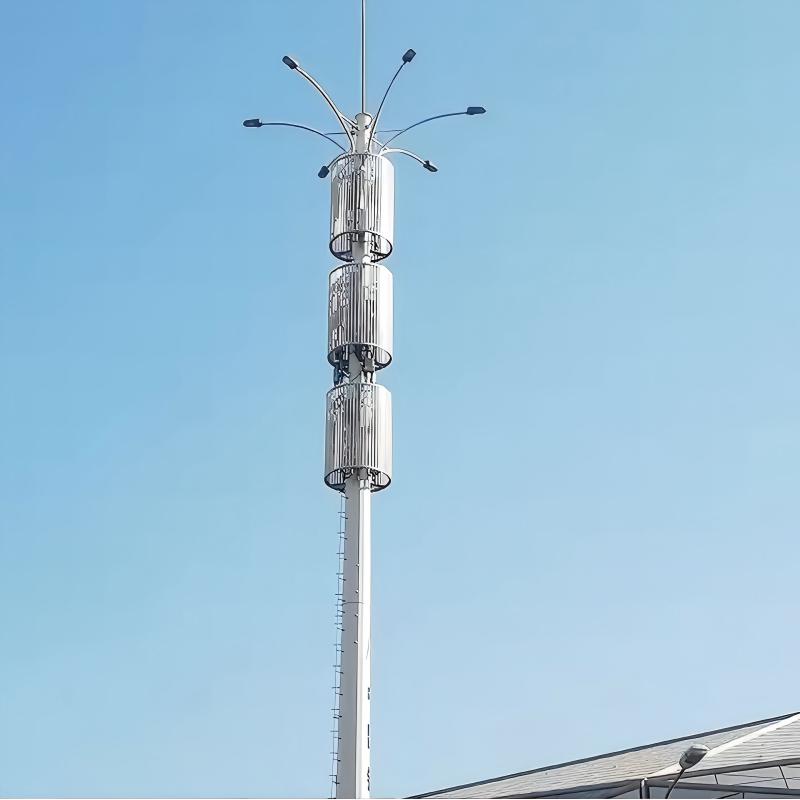
Minimizes visual impact by disguising the structure as a tree, flagpole, or light pole.
Designed for use in highly sensitive zones (residential, historical districts) where visual pollution is restricted. The structural Monopole core is clad with RF-transparent materials (e.g., FRP bark/branches) to seamlessly blend into the landscape.
Key Specifications
Structural Type: Monopole Core with Concealment Cladding
Aesthetic Options: Mono-Pine, Mono-Palm, Flagpole, Light Mast
Cladding Material: Fiberglass Reinforced Plastic (FRP)
RF Transparency: Max 1.5 dBm Insertion Loss
Best for: Residential Areas, Parks, Aesthetic Compliance
| Parameter | Specification (Referencing Brochure Data) |
|---|---|
| Structural Design Software | PLS TOWER, MS TOWER, ASM TOWER |
| Max Design Wind Speed | 0 - 330 KM/H (Custom Engineered per TIA-222 standard) |
| Main Steel Material Grade | Q355B, Q420 (ASTM A572 GR50, GR65 Equivalent) |
| Connection Method | Telescoping Slip-Joint or High-Strength Flange Connection |
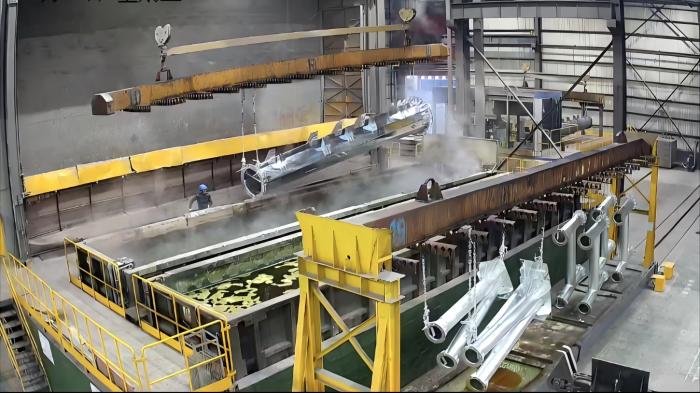
| Corrosion Protection | Hot-Dip Galvanized per ASTM A-123 / ISO 1461 |
| Life Expectancy | More than 20 years (Based on HDG standard) |
| Monthly Supply Capacity | 3,000 Tons Per Month (High-Volume Assurance) |
Monopoles are the preferred choice for their minimal site requirements and accelerated deployment schedule compared to lattice structures.
Requires significantly less ground area (typically 9-18 sqm) than a lattice tower, making permitting easier in urban or congested sites.
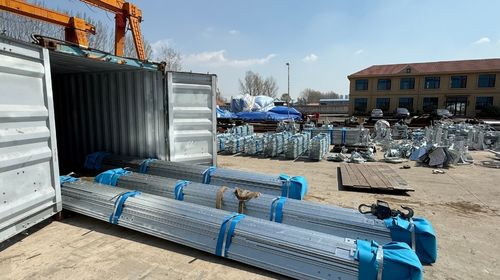
Prefabricated segments and the simple slip-joint connection method reduce on-site construction time by up to 40%.
The slender tubular profile is less visually obtrusive. Easily customized or camouflaged (Mono-Pine, Flagpole) to meet zoning requirements.
Fewer joints and components than lattice towers, combined with high-quality galvanization, lead to reduced long-term inspection and maintenance expenses.
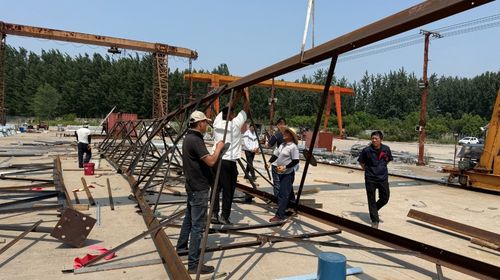
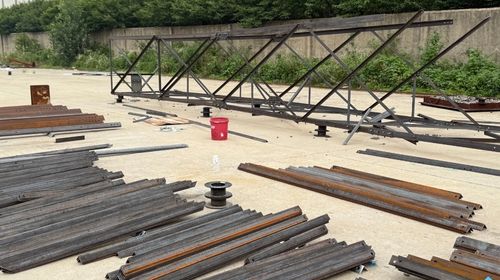
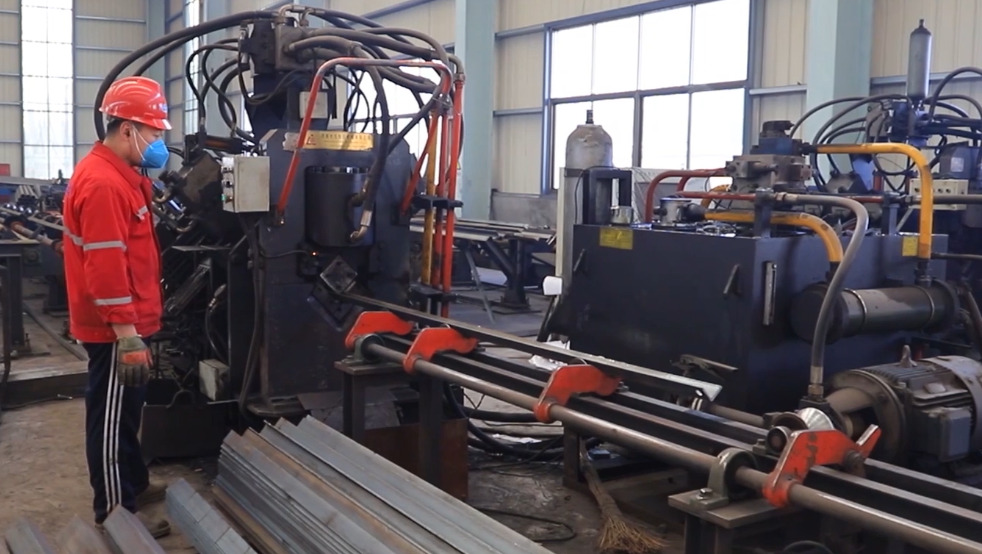
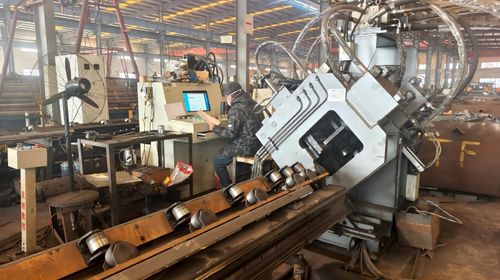
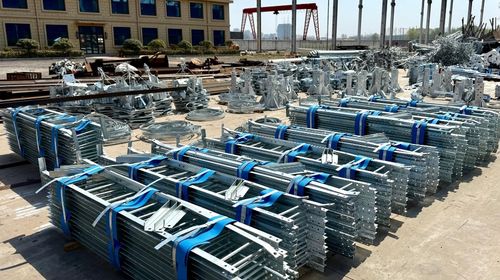
Our fabrication process is centered on high-precision rolling and welding to ensure perfect fit-up between sections.
All XH Monopole Towers are designed using licensed software and comply with the latest revision of structural and fabrication codes.
ANSI/TIA-222-H (Current Structural Standard for Telecom Towers)
ASTM A123 / ISO 1461 (Minimum 86μm coating thickness)
AWS D1.1 (Structural Welding Code) / ISO 9001:2015
Whether you require a custom height, specific wind load rating, or aesthetic concealment, our in-house structural engineering team is ready to deliver a precise Monopole solution.
Submit your project specifications and foundation requirements today for a technical review and manufacturing proposal.

XH TOWER strictly implements GB8702-2014 "Electromagnetic Environment Control Limits", and the measured value of the base station antenna radiation power density is ≤0.08W/m² (only 40% of the national standard limit).
By optimizing the antenna tilt angle (electronic downtilt angle 0-15° adjustable) and vertical lobe width (6°-90°), the radiation value 10 meters away from the ground is ensured to be attenuated to below 0.01W/m².
By optimizing the antenna tilt angle (electronic downtilt angle 0-15° adjustable) and vertical lobe width (6°-90°), the radiation value 10 meters away from the ground is ensured to be attenuated to below 0.01W/m².
For residential sites, XH TOWER can also provide a real-time radiation monitoring data disclosure platform, where users can scan the code on their mobile phones to view dynamic radiation values and eliminate public concerns.
Low torsional stiffness: an L-shape is unsymmetrical, so it resists twisting poorly versus closed or symmetric sections. This matters where torsion or lateral buckling is possible.
Direction-sensitive strength: one leg carries more of the load depending on orientation — designers must account for eccentric loads and local bending.
Less material efficiency: for the same weight, I-sections or tubular sections usually provide higher moment of inertia (stiffness) and therefore carry larger bending loads more efficiently.
Connection and fatigue issues: lattice/angle assemblies need many bolted/welded connections that concentrate stress and require inspection/maintenance; fatigue cracks can initiate at bolt holes or weld toes.
Aesthetic & aerodynamic drawbacks: open lattice made from angles increases wind profile and creates more surfaces to corrode or collect dirt compared to smooth tubular members.
angle steel is excellent for cost-sensitive, short-to-medium spans and lattice towers, but for long spans, heavy bending/torsion, or low-maintenance needs, prefer I-sections, box/tubular sections, or engineered hollow sections.
Geological requirements for signal towers focus on the soil and subsurface conditions to ensure structural stability. A geotechnical study, including a soil test and boring logs, is mandatory to determine the site's ability to support the tower and withstand environmental forces like wind and earthquakes. The investigation assesses foundation rock types, groundwater levels, and slope stability to inform the appropriate design for the tower's footing and overall structure. Geological requirements for signal towers focus on the soil and subsurface conditions to ensure structural stability. A geotechnical study, including a soil test and boring logs, is mandatory to determine the site's ability to support the tower and withstand environmental forces like wind and earthquakes. The investigation assesses foundation rock types, groundwater levels, and slope stability to inform the appropriate design for the tower's footing and overall structure.


